The development of the Sihlhof
Stories from Sihlhof – a look behind the scenes
40 years of HWZ – and at the heart of it all, a building that has become a second home for generations of students: the Sihlhof on Europaallee. Since its construction between 2001 and 2003 and its subsequent opening, much more has changed behind its concrete walls than one might expect at first glance. What many do not see: behind every working projector, every lift, and every stable Wi-Fi connection, there is a story. Here are six insights from the engine room of the Sihlhof.
40 years of HWZ · February 23, 2026
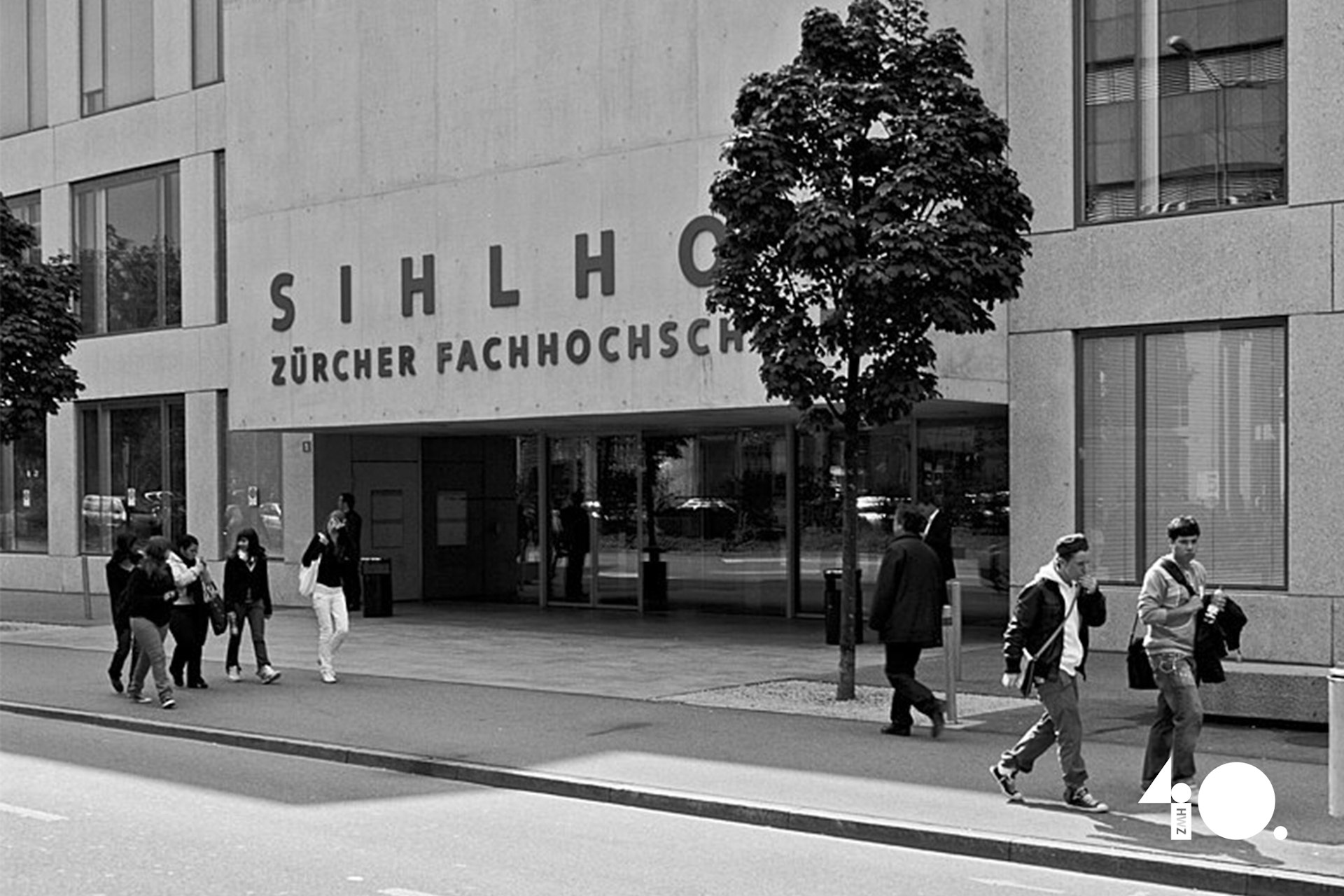
This article is part of the content series marking the 40th anniversary of HWZ. Through this series, we aim to showcase the diversity of stories from our university and highlight the topics and individuals that have shaped, and continue to shape, HWZ.
To mark the 40th anniversary of HWZ, we take a look behind the scenes at the Sihlhof. The striking building right by Zurich main station is not only HWZ’s central place of study, but is also shared with the Zurich University of Teacher Education (PH Zürich) and the SIB Swiss Institute of Business Administration. Since its opening in 2003, far more has changed here than is immediately apparent. What now runs smoothly is the result of over 20 years of adaptation and ongoing development. Here are six insights that illustrate just how much the Sihlhof has changed over the past two decades.
No reception wanted: Why there was (almost) no network coverage in the past
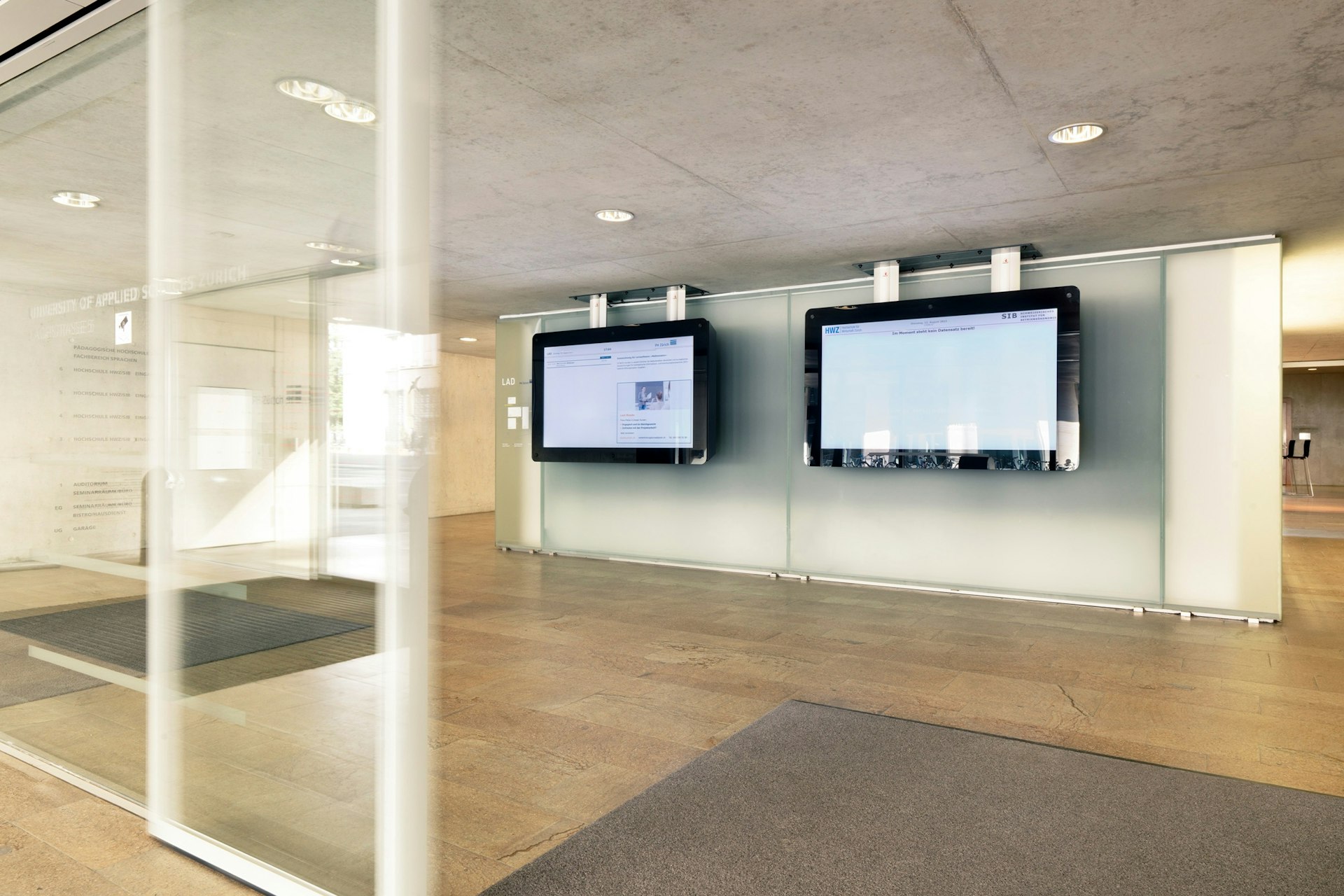
These days, the most one might complain about is a weak Wi-Fi signal. However, when the Sihlhof campus opened in 2003, this was actually part of the concept. The decision was made to deliberately forgo a network connection, as poor mobile reception meant fewer distractions and greater focus on teaching. At the time, this made sense: laptops were bulky, Wi-Fi played hardly any role, and many students did not even bring their own computers. Anyone who needed internet access was given an access point for the room, including the password, to enable internet access. After the lesson, the device was removed again.
The only internet access in the entire building was provided by the two monitors, or originally computers, in the entrance area, where students would queue to briefly browse the internet.
It was only when students increasingly began to bring their own laptops that upgrades became necessary. The university started by installing internet routers in the building, and extension cables were laid across the study rooms – creating a constant tripping hazard. Later, mobile power strips were introduced, which are still kept ready in boxes to this day.
Design with consequences: Costly custom-made solutions
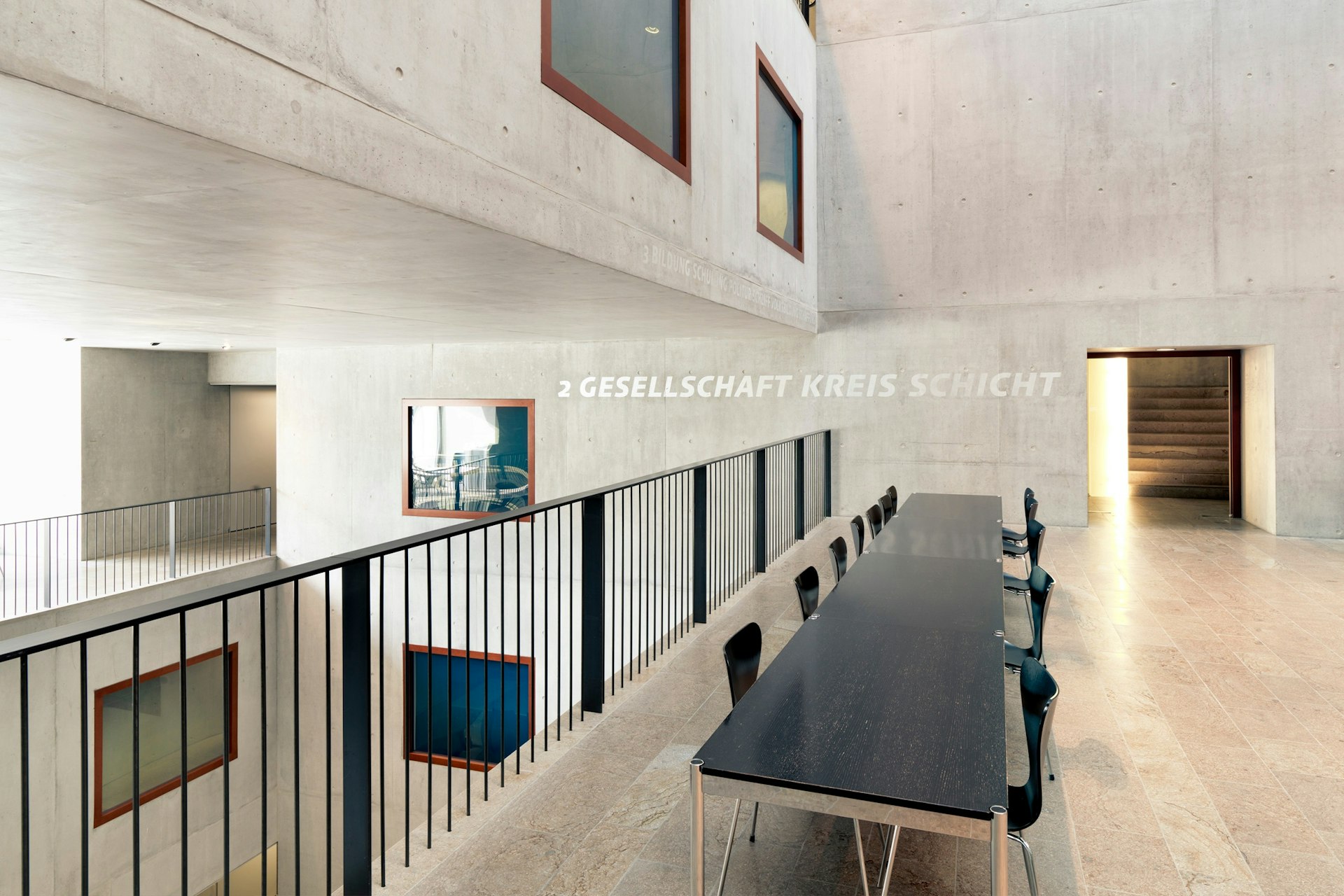
The Sihlhof is an architectural statement – and this is evident in the details. Many components were custom-made specifically for this building; light switches had to be newly painted to match the colour scheme, and the doors with narrow glass panels in the centre are bespoke, as are the matching locks. Even the smoke detectors were painted in concrete colour to ensure they blend seamlessly into the overall design.
The office signage also reflects this approach: it is positioned exactly one centimetre away from the wall and is extremely expensive. Whereas wall lettering used to be sprayed directly onto the concrete, it is now applied using adhesive, so that it can be removed without damage if changes are needed. This shift is evident not only in technology, but also in mindset. In the past, aesthetics and individuality were the main priorities; today, there is a greater focus on modular solutions – repairable, interchangeable, cost-efficient and sustainable.
The 5th Floor – once «Zurich’s prime printing location»
On the fifth floor, in room 506 of the Sihlhof building – one of the best locations in the house – there was once an in-house print shop. Where offices are now located, there used to be printing presses, a paper storage area, and the HWZ dispatch department. At the start of each semester, up to a pallet of paper was processed per week – around 100'000 sheets. Even during the rest of the year, the machines continued to run, using about half a pallet per week.
With increasing digitalisation, the print shop was moved to the basement. Then the pandemic struck. Suddenly, course materials were digital, meetings took place online, staff were working from home, and demand plummeted – not only for practical reasons, but also due to growing awareness of sustainability.
Two lifts – an idea that did not work
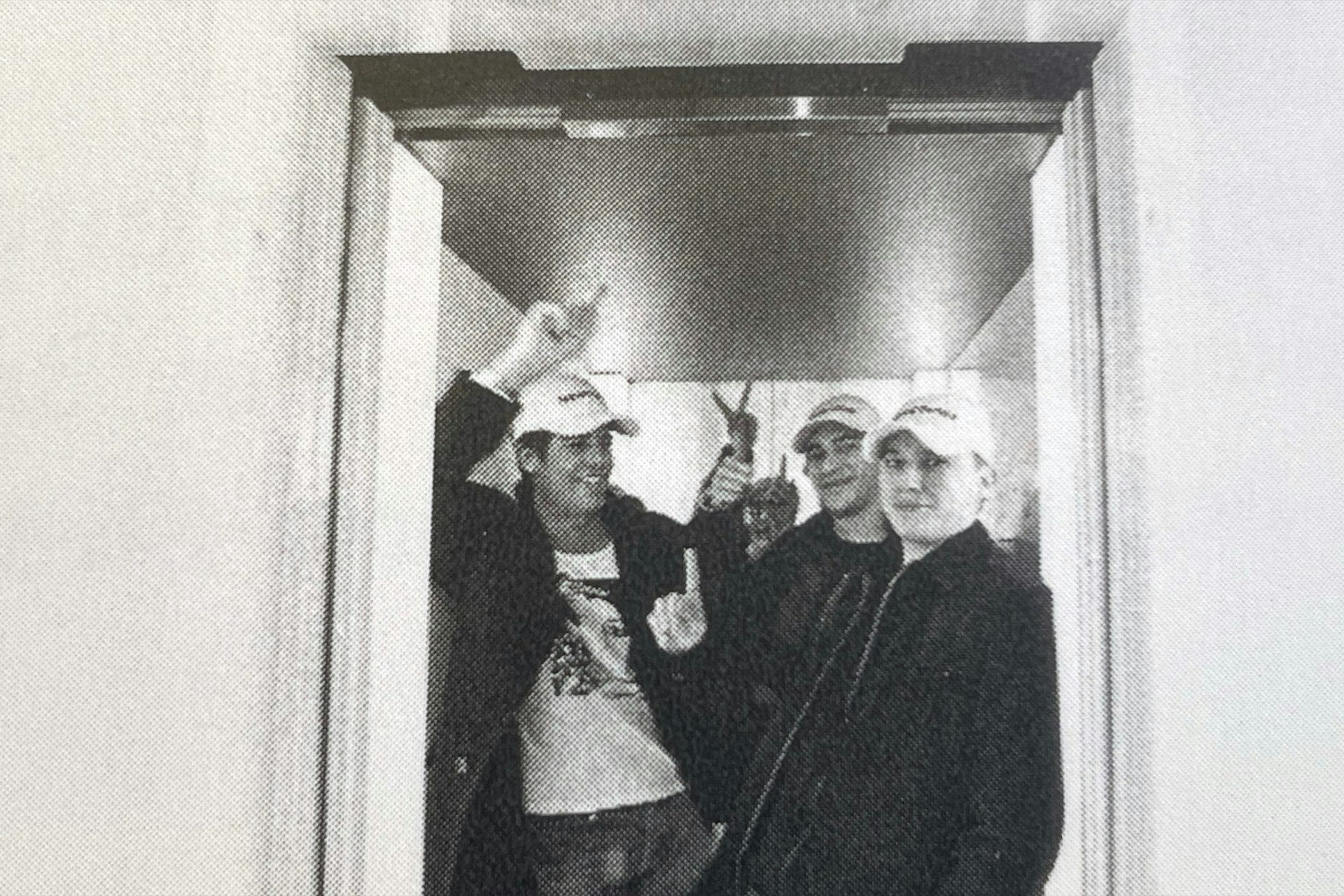
Anyone familiar with the Sihlhof knows there are three lifts. The two lifts on the right were designated for HWZ, while the left-hand lift was intended for the PH, which occupies the Sihlhof from the basement up to the second floor. Accordingly, this left lift only travels between the ground and second floors. Although this arrangement was well organised in theory, it did not work for long in practice. Naturally, most people used the larger lift on the right.
PS: At one point, there was even consideration given to programming the lift controls so that it could only be operated from the ground floor and then from the second to the sixth floor, in order to prevent people from using the lift for the lower floors.
Corona – the digital leap of five years
Before 2020, hybrid teaching and working from home were not topics of discussion. Then came the decision to close the university, marking one of the greatest transitions in the institution’s history. Within a very short time, the IT department, facilities management and university leadership developed a functioning hybrid teaching model. Cameras for hybrid teaching were installed, infrastructure was adapted, and staff were moved to home working. Teaching continued from the very first day – without interruption.
«I am convinced that, in terms of technology, we would not be where we are today, but would still be five years behind», says Markus Brem, Head of Facility Management.
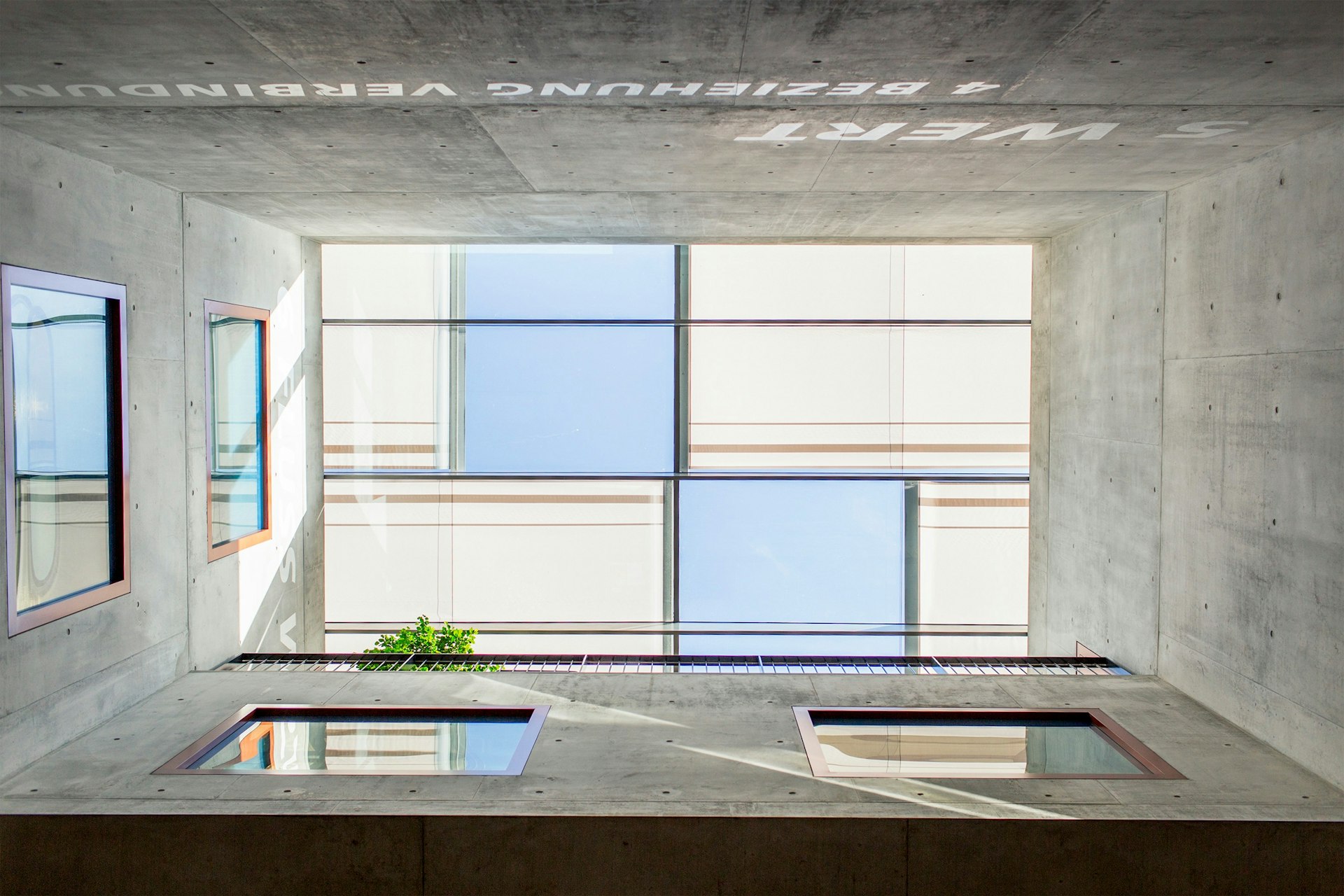
Photo subject: Sihlhof
The Sihlhof has always been, and remains, an architectural eye-catcher. Its design attracted attention from the very beginning, with tourists coming to Europaallee to photograph the building. To this day, architects and specialists regularly visit to study and document the building.