Looking back, looking ahead
10 years of CAS NextGen Banking: the decade in which banking was redefined
Ten years ago, HWZ launched a programme focused on digital finance—at a time when many developments were still seen as trends. Today—after 18 cohorts, 435 graduates, and 806 occupied aeroplane seats—it is clear: the CAS NextGen Banking & AI HWZ has not only observed the changes, but has also played an active role in shaping them.
Campus · February 18, 2026
Zurich, 2016 – the calm before the storm
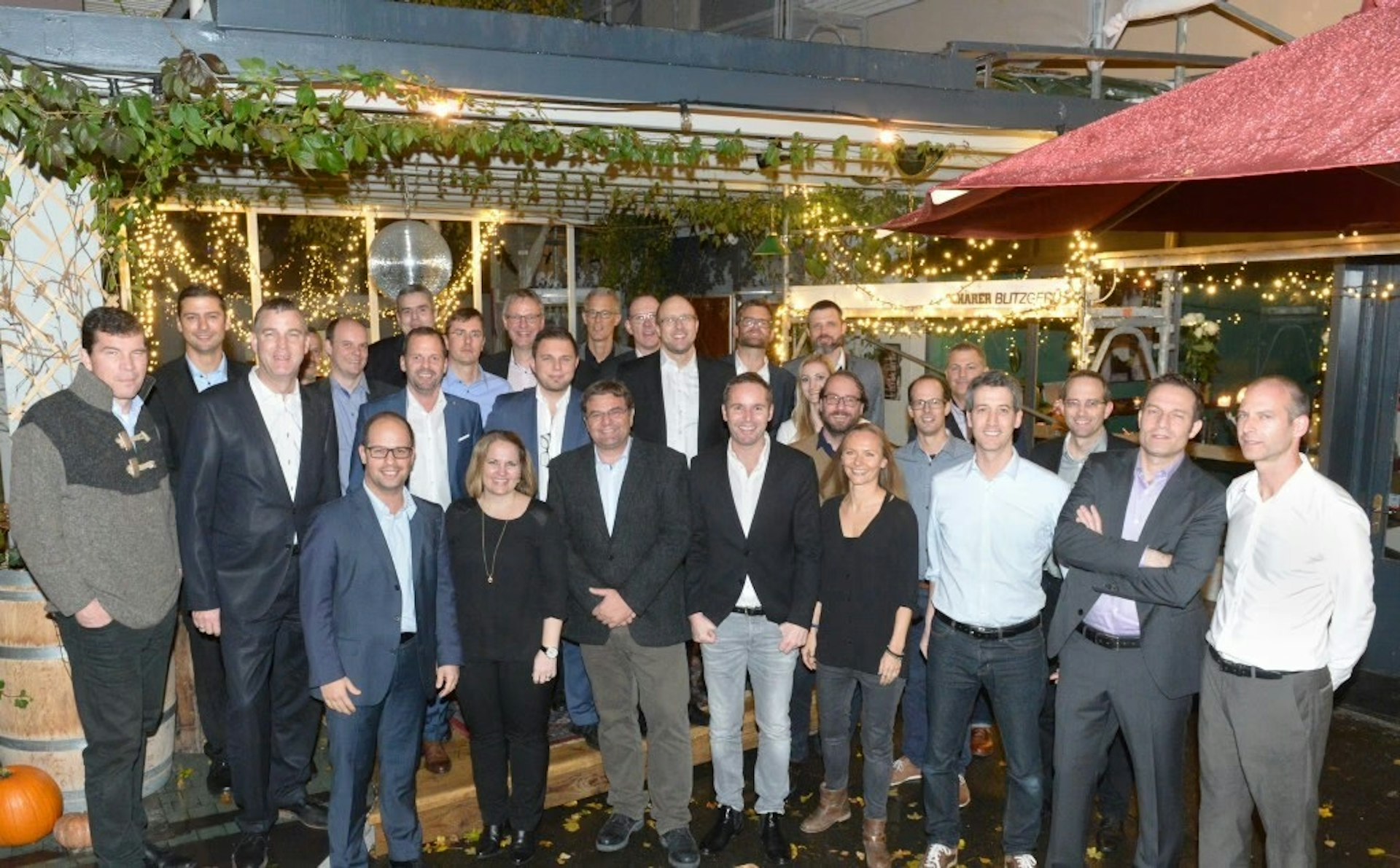
A seminar room at HWZ: 24 students begin the then newly launched CAS Digital Finance. The banking sector appears stable and well-structured, with established processes. At the same time, the first signs of significant change are emerging: Revolut employs fewer than 50 staff, Bitcoin is a 7 billion experiment for a handful of idealists, Swiss challenger banks do not yet exist, and neither open banking nor digital 3a solutions are topics of discussion.
In retrospect, it is clear that the course began precisely at a time when the industry was heading towards structural change. The CAS aimed not only to discuss digitalisation, but also to understand what happens when technology encounters a centuries-old business model.
The CAS I completed in 2016 provided a comprehensive insight into digital trends and their impact on the financial sector. The CAS helped me to better understand and contextualise the scope and diversity of these developments. With this knowledge, I was able to raise critical questions within our bank, challenge existing structures, and initiate important change processes.
Learn where change happens
From the very beginning, the CAS has embraced an international perspective, travelling to London a total of 16 times and booking 806 seats in total—enough to fill six entire SWISS Airbus A220 flights (to London and back). 😉 Yet more important than this remarkable figure is the shift in perspective. There, students experienced first-hand how new models emerge: challenger banking, fintech start-ups, API ecosystems, data-driven services, and open banking.
The study trip to London was one of the highlights. Visiting innovative banks, the FinTech company Wise (now one of the most valuable and established FinTechs in the UK), as well as Level39, provided an impressive insight into how the financial sector is reinventing itself. It was truly inspiring to experience this dynamism first-hand. The trip and the entire CAS not only shaped me professionally, but also sparked a lasting enthusiasm for innovation and digitalisation.
It soon became clear that «Digital Finance» was no longer sufficient, as the financial sector began to question itself: business models, technology, customer expectations. As a result, the programme evolved into the CAS Future Banking & Digital Transformation HWZ.
In just a few years, development has accelerated rapidly:
Revolut has grown from 37 employees in 2016 to a global player with 12'000 staff and millions of customers by 2025.
In 2025, VIAC will surpass CHF 6 billion and set new standards in the 3a market.
Neon, a Swiss digital banking pioneer, has gained approximately 237'000 customers since 2019.
Bitcoin has grown from 7 billion USD to, at times, as much as 2.5 trillion USD.
Apple Pay was launched in Switzerland in 2016 and is set to reach a record year globally in 2025.
TWINT is part of everyday life and reaches over 6 million users.
Open banking is becoming a reality – although not at the same pace everywhere.
From Digital Finance to NextGen Banking & AI
And with each new wave, it becomes increasingly clear: those who do not continue learning risk being left behind. This is why, driven by the transformation brought about by AI, the programme has evolved into today’s CAS NextGen Banking & AI HWZ.
The figures for the CAS are impressive: 18 cohorts, 324 days, 2'592 lessons, 435 students. However, the real impact comes from the people involved: for each cohort, 18–20 lecturers contribute their direct experience from banking, fintech, technology, and regulation to the teaching. They do not simply convey textbook knowledge, but rather practical insights, decision-making, mistakes, strategies, and the real-life workings of the financial world.
Equally important are the students themselves: their questions, backgrounds, industries, and expertise. They come from banks, asset management, public authorities, and consultancy firms, and learn just as much from each other as they do from the lecturers. The exchange between both sides is what defines the programme: an ecosystem that brings together different perspectives, changes ways of thinking, and actively shapes the future of banking.
For me, the CAS represents the rock ’n’ roll of the banking sector: boldly challenging the status quo, looking ahead, and taking responsibility for driving change. It has given me the impetus not only to support transformation, but also to help shape it actively and to pursue it with determination.
While in 2016 the main question was still «How do we digitalise processes?», today it is:
How are business models in banking fundamentally changing in the age of AI?
Why must data, AI and platforms be considered together?
How does blockchain make the financial system more efficient and transparent?
What long-term role will digital assets play in banking?
How are customer expectations, behaviours and decision-making processes changing?
Banking is therefore not only becoming more digital. It is also becoming smarter, more immersive, and at the same time more personal. This is precisely why the next stage in the development of the CAS NextGen Banking & AI HWZ is being created. The future of banking emerges where trends interact intelligently. The question is not whether banking will continue to change, but how quickly.
The next decade begins now!
Would you like to join us in shaping the future of banking? The next CAS NextGen Banking & AI HWZ begins in March, with a second intake in September.