Grow personally, lead effectively
«Development arises through dialogue» – What leadership requires today
The most powerful «aha» moments do not come from textbooks, but from self-reflection. Prof. Dr. Claude Siegenthaler supports leaders on their journey towards greater self-efficacy. In this interview, he explains how development succeeds, why genuine change gives you goosebumps – and why courage to be open is rewarded.
Testimonial · October 16, 2025
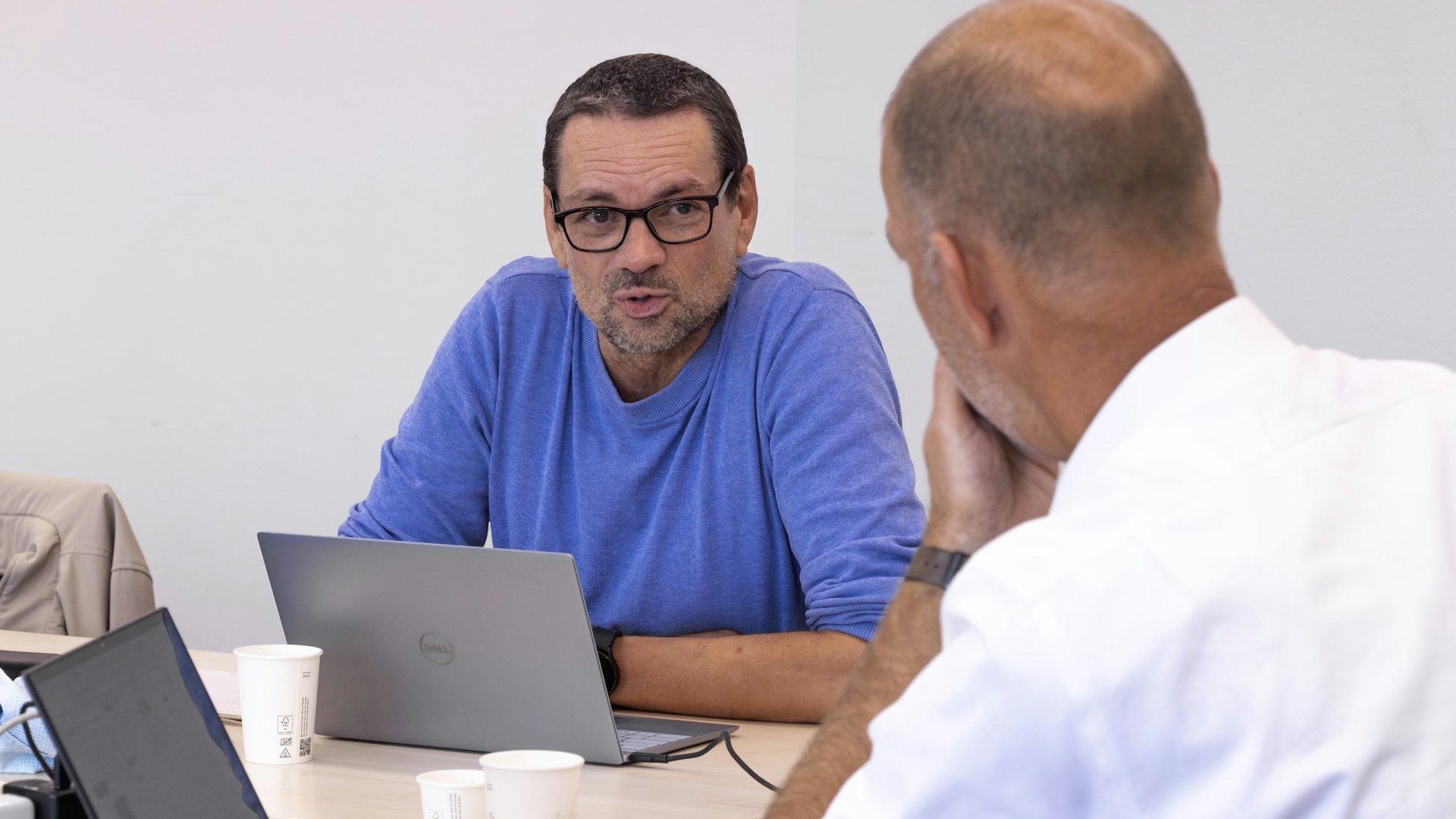
Claude, how did you first become interested in the topic of personal development – and what is it that continues to inspire your enthusiasm for it today?
Since my time at high school, I have been engaged in leadership roles throughout my life – so to speak, always the «boss» – and I learned early on how important it is to push your own boundaries and grow through challenges. This is particularly effective not alone, but within a community. That is precisely why I began, as a professor, to develop a teaching approach that enables personal development in a meaningful way.
Is there a formative experience from your work as a coach that has had a lasting impact on your approach?
I was surprised and moved when I was spontaneously referred to as a «learning designer» and later as a «coach». I have no formal training in these areas; instead, I developed everything through practical experience within my organisations and teaching formats. What excites me most today is seeing our students marvel at their own development and make significant progress in their effectiveness – those are truly goosebump moments!
Why do you consider personal development to be a key factor for leadership in the digital age?
In the past, people went to university to acquire knowledge. Today, that is no longer sufficient – practical skills are in demand. Especially in leadership roles, digitalisation means not only technological change, but above all the ability to develop and coach people.
As knowledge and skills have never changed as rapidly as they do today, it is essential to enable organisations to continually transform themselves. This makes personal development a crucial competence.
Many managers invest heavily in specialist knowledge, but less in personal development. Why is this the case, and how can this be changed?
I am fortunate to observe that it is particularly those leaders who have understood the true implications of the digital age – continuous learning and change – who actively seek personal development. Ten years ago, our programme would have attracted little interest; today, there are increasingly more «imitators», as more and more leaders recognise this necessity. This is something I am very pleased about!
What role do tools such as 360° feedback or the learning diary play in the module?
One key insight from my work is: development is conversational.
It has always been this way: through dialogue with others or with ourselves (keyword: reflection), we recognise what drives development and which potentials are yet to be unlocked. We work on this both in the classroom (peer learning and feedback), in the learning journal (with questions tailored to the programme), and by incorporating feedback from our professional or personal environment (360° feedback).
This brings enormous clarity and, precisely because of the diversity of perspectives, creates an effective learning environment. In this way, «self-awareness» is, so to speak, «developed».
What happens if participants are faced with critical or unexpected feedback?
We foster a culture of constructive feedback, which may – and indeed must at times – be clear and direct. It can also be unexpected, but it should never be disrespectful. If it is, we will intervene. In this way, we create an environment where development becomes possible.
Is there a method that you particularly enjoy using?
As a coach, I offer a range of methods and work on an individual basis. Everyone is at a different stage in life and in their career. One method that is often chosen is the 30-day challenge. This approach helps to embed behavioural changes concretely in everyday life – and has a surprisingly lasting effect.
Which three questions should every leader regularly ask themselves in order to continue their own development?
What impact do I have? This is a question you should not only ask yourself, but above all, put to those around you!
What costs me energy, and what gives me energy? By acting accordingly, I can ensure lasting happiness and health – and thus also success – in the long term.
Do I have the courage and (self-)confidence to be myself – that is, to be authentic – in every situation? And am I in an environment where I can make a real impact precisely because authenticity builds trust?
Is there a habit or routine that you would recommend to everyone?
I recommend and practise an approach that views conflicts as a resource which every leader should make use of, rather than avoid. Those who recognise, address and resolve conflicts early and with respect always create opportunities for improvement or prevent more serious issues. This is what I encourage.
What do you hope participants will take away from the Personal Development module in the long term?
In this respect, I could not wish for more: almost all participants later give feedback that they have recognised what is important for their further development as leaders and have found the courage to continue on this journey. And they do so in impressive ways – just ask our alumni!
And finally: What advice would you give to new participants as they begin their journey?
The more openly and personally you engage, the more you will gain in return. Our setup rewards courage, authenticity and a willingness to learn – and the impact of this is remarkable.
Thank you very much, Prof. Dr. Claude Siegenthaler, for your valuable insights, which inspire a desire for further development.