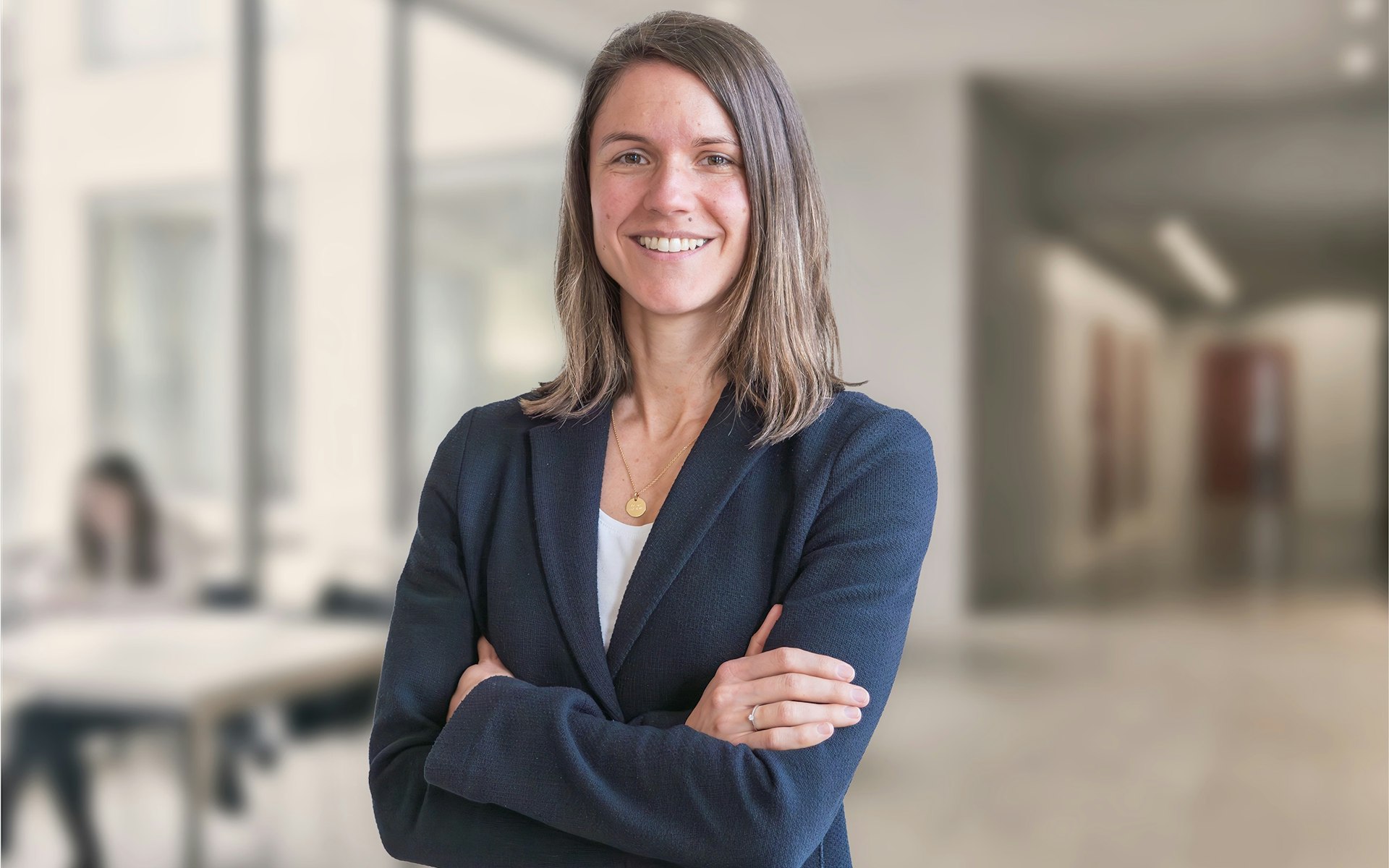
Learnings from the EMBA by alumna Karin Schmidt
Leadership is situational and requires adaptability as well as a clear set of values.
How can effective leadership be achieved in a changing labour market? Karin Schmidt, Head of Human Resources at Raiffeisen Switzerland, discusses her approach to leadership and the importance of attitude, organisational culture, and practical relevance in an interview. Looking back, she explains how the EMBA in General Management at HWZ sharpened her business perspective and continues to support her in her leadership role to this day.
Testimonial · February 3, 2026
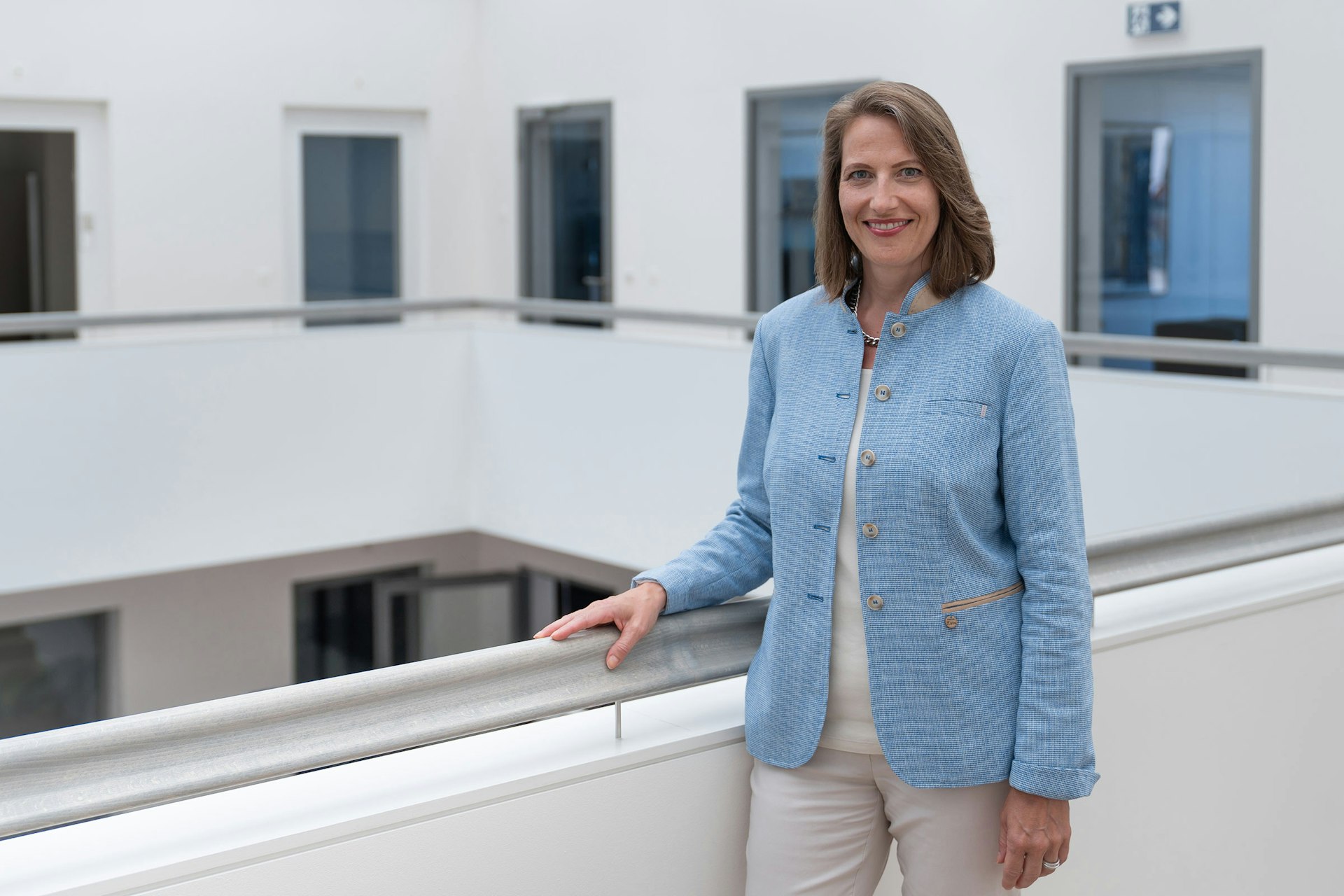
From 2012 to 2014, you completed the EMBA in General Management HWZ. What motivated you to take this step at the time, and what expectations did you have when you began your studies?
It was important to me to complete a further education programme that is broadly based and does not focus solely on HR-specific topics. In my view, HR is closely linked to business and must be able to engage with it on an equal footing. That is why I chose the Executive MBA – General Management HWZ.
Today, you are Head of Human Resources at Raiffeisen Switzerland. Which decisions, opportunities or even obstacles have been particularly significant on your journey to this position?
At the start of my career, it was crucial that I had supervisors who believed in me and recognised my potential. Combined with my motivation, enthusiasm for learning – and occasionally a dose of courage – this has continually enabled me to progress.
When you look back on that time: Which specific lessons from the EMBA helped you to take on responsibility in demanding leadership and HR roles?
For me, it was the broad range of topics covered in the EMBA that was particularly enriching. I found the interconnection between the subjects extremely valuable, as well as the interactive, collaborative learning environment and the constant challenges we faced. The highly diverse composition of our study group was also very helpful, as it enabled us to benefit greatly from one another.
Was there a professional milestone at which you particularly felt how much this period of further study had shaped you?
In my view, there is no single milestone; rather, I continue to benefit from what I learned and experienced. I am still in touch with some of my fellow students, which I greatly appreciate.
In your interview with Finanz und Wirtschaft, you mention that, at present, employees are «in the driving seat», but that this balance now appears to be gradually shifting again. What do you attribute this development to, and what does it mean for companies?
We are observing a slight increase in unemployment in the labour market, while at the same time the number of advertised positions is declining. This means that there are more jobseekers than available job opportunities. Within our own organisation, we are seeing a high number of applications, and some positions are being filled more quickly than before.
It seems to me essential that organisations continue to be very thorough in selecting their future employees and ensure that a win-win situation is created for both the organisation and the new employees.
You emphasise the growing importance of leadership, culture, and attitude. How has your own understanding of leadership evolved over the years?
Over time, I realised that there is no such thing as the right kind of leadership. Leadership is situational and requires adaptability as well as sensitivity. For me, it is essential to support, challenge and encourage employees on their journey. Together with the team, I aim to achieve success and create added value for our organisation. In doing so, I lead by example and strive to inspire my team to deliver their best.
The EMBA at HWZ is highly practice-oriented and designed to be compatible with professional employment. How important was this combination for your personal learning success and the direct application in your day-to-day work?
It was precisely this combination that was decisive for me.
I deliberately chose a programme that was highly practice-oriented. This allowed me to reflect on topics in real-world contexts rather than learning about them purely in theory. In this way, I was able to apply and implement newly acquired knowledge continuously throughout my studies.
In your view, which skills are essential for leaders today in order to remain effective in a dynamic and competitive job market?
In addition to my leadership philosophy outlined above, I consider it essential that leaders are aware of their role and influence, and that they actively embrace these responsibilities. It is about fostering a shared understanding of, and alignment with, objectives, providing inspiration, shaping developments together, and communicating authentically and clearly.
You work with colleagues from different generations. What characterises the new generation of employees, and what can managers learn from them?
The younger generation is looking for meaningful work, opportunities for development and involvement, and inspiring leaders. They want to make an impact, work in a dynamic team, and have flexible working arrangements. I believe this is not so different from the expectations of older generations. The difference is that the younger generation actively stands up for these values and is more willing to change jobs if their expectations are not met.
In conclusion: What advice would you give to someone who is considering undertaking an EMBA at HWZ today – with regard to career, personal development, and impact?
I consider the EMBA programme to be highly recommendable. It covers a broad range of topics, offers the opportunity to gain insights into various industries, and is practice-oriented. The development of one’s own leadership skills is also supported, enabling every graduate to grow personally as well. In general, I recommend being curious, stepping outside your comfort zone, and remaining open to change.