Rethinking innovation
Handover in the CAS Innovation Management: Oliver Durrer appointed new programme director
For ten years, Martin Kägi shaped the CAS Innovation Management as programme director – now Oliver Durrer is taking over the role. In a joint interview, they discuss practice-oriented innovation, current developments, and the future focus areas of the programme.
Campus · March 25, 2026
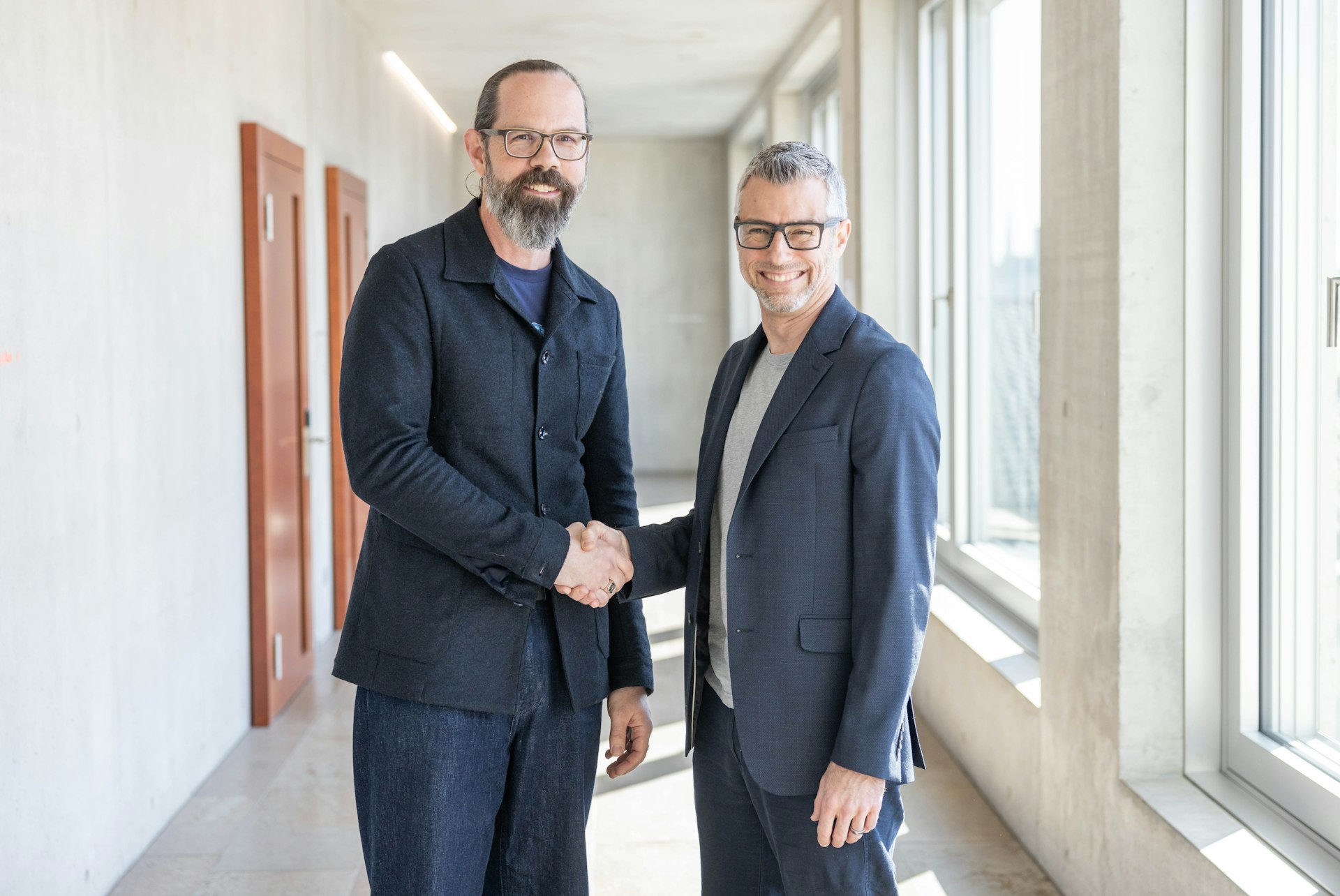
Martin, you have led the CAS Innovation Management for over ten years. Looking back, what are you particularly proud of?
«That, as a teaching team, we have consistently managed to focus on real challenges from the Swiss business world. No showmanship, no Silicon Valley stories. For example, through the Practice Days format or when guest speakers were involved. The CAS participants were always expected to contribute: limited resources, imperfect technology, a great deal of uncertainty, and the question: what is still possible under these conditions? Innovation in real life. And that is precisely what has fascinated me.»
In addition to the consistent practical orientation, Martin Kägi also emphasises the lasting impact of the network:
«I am also pleased that the CAS has given rise to a network that continues across different cohorts. I am an unabashed networker. This stems from my belief that partnerships, even those extending beyond company boundaries, still hold a great deal of potential.»
From methodological knowledge to implementation competence
Over the past ten years, the understanding of innovation management has fundamentally changed: whereas the focus was previously primarily on methods, today the effective implementation of these methods within the organisational context has come to the fore, as Martin explains:
«When we started, concepts such as agility and design thinking were still largely unknown at universities of applied sciences. There was great curiosity: what are these, how do they work? This has changed – today, many people are familiar with these concepts. The key issue now is implementation: how can innovation be embedded within an organisation? This requires a broader perspective on team dynamics, leadership, and culture. A good idea or technology alone is not enough.
How can we truly appreciate another person's perspective—even when their way of thinking is completely different? Ultimately, this is a question of attitude. And that is often more challenging than applying methods.»
The success of the CAS is evident not only in fully booked courses, but above all in the impact it has on participants.
Was there a moment when you realised: the programme really works?
«The CAS was regularly fully booked, and I was nominated early on for the Best Teacher Award – which, of course, pleased me. But what touched me even more was when participants were able to achieve real impact within their organisations.»
One experience has particularly stayed with Martin:
«For example, there was one participant who, at first, was uncertain and doubted whether what she wanted to try out in the workplace would work at all. She had to fight hard in a workshop to gain the necessary freedom for a more participative and creative way of working. All the more remarkable, then, was the subsequent feedback – positive and accompanied by encouragement to continue in exactly the same way.»
What makes the CAS Innovation Management unique
A central aspect of the CAS Innovation Management HWZ is its distinctive learning culture, which has evolved over the years. For Martin Kägi, this begins with the attitude of the teaching team:
What defines the CAS begins with the attitude that our teaching team brings into the room. This is especially important because we have always had many experienced leaders and innovation professionals among the participants. My aim is not simply to impart knowledge, but to engage in a shared exchange. Particularly when it comes to innovation, I am deeply convinced that the experience each person brings is at least as valuable as my own. As a lecturer, in such moments, I am part of the group—not at the front, not above.
This creates a space that goes far beyond mere learning:
«Over the course of the CAS, many cohorts develop into social learning communities in which people are able to set aside their everyday 'armour'.»
Passing on the baton after ten years
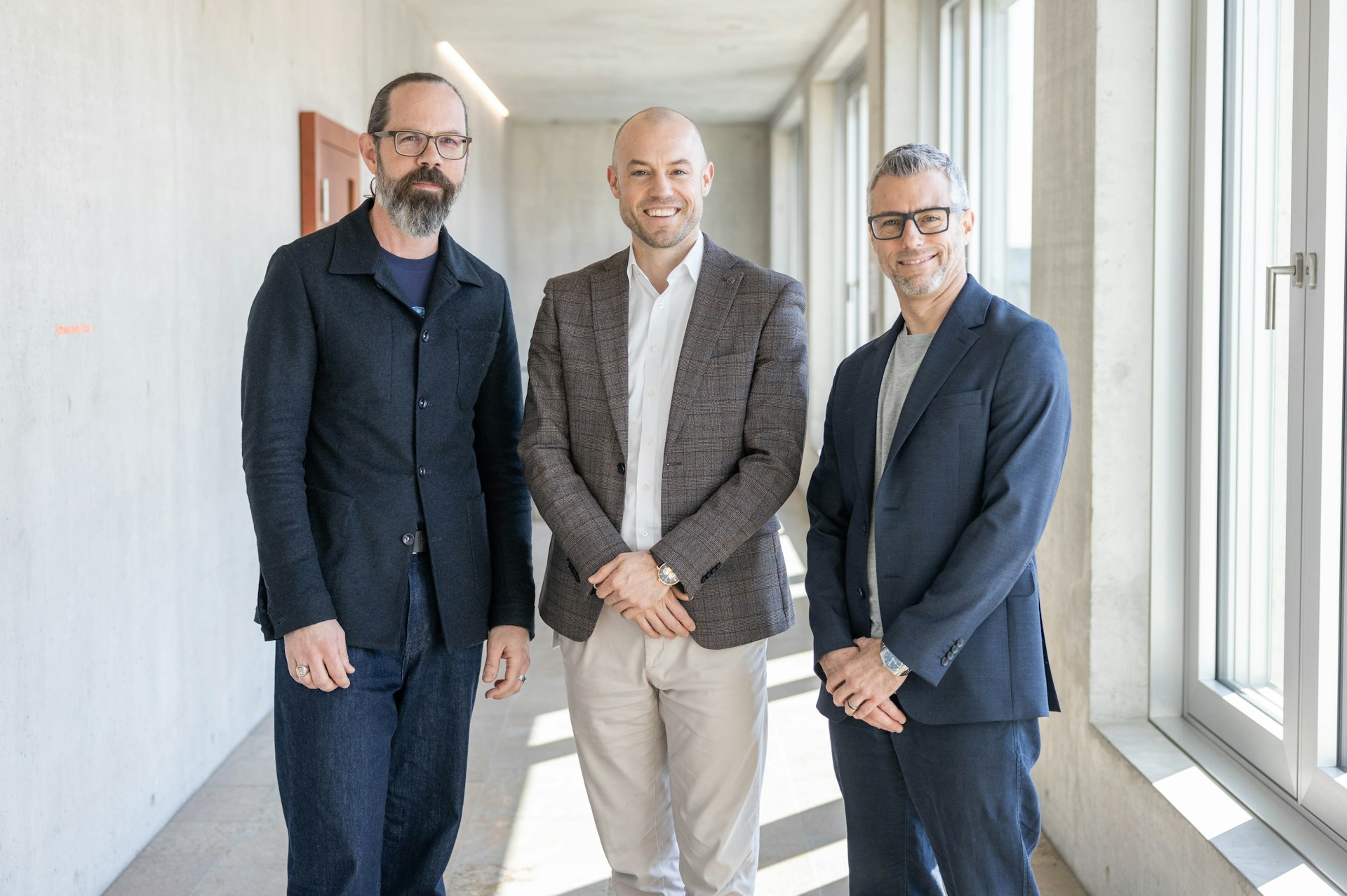
After ten years, Martin Kägi is handing over the programme leadership to Oliver Durrrer – deliberately and at the right time.
Martin, why is now the right time for the handover?
«Ten years, fifteen cohorts – I have a fondness for pleasing numbers. And I would rather stop while the energy and the feedback about myself are (still) positive.»
In addition to this personal decision, his academic interests have also evolved:
«Today, I am increasingly interested in the question of what is actually required to make collaboration and participation possible. This is precisely the foundation for genuine innovation. For the past three years, I have been co-head of the degree programme in CAS Systemic Organisational Development, where I can further deepen this approach.»
His work is also recognised at the departmental level:
With the CAS Innovation Management, Martin Kägi has been a pioneer at HWZ. Through his work – both as programme director and as co-head of the Centre for Innovation & Lean Management – he laid the foundation for what is now our Department of Entrepreneurship, Innovation & Academy. I am very grateful to him for this, and all the more pleased that he will continue to share his experience with us as a lecturer.
Martin is pleased to remain involved with the CAS as a lecturer. At the same time, he is glad to hand over the leadership to an experienced innovation practitioner, who is very much looking forward to their new role.
Oliver, what particularly attracted you to the role?
«Innovation is a subject close to my heart. It is also one of my greatest passions to support people who wish to shape change and drive it forward with real impact. I am very much looking forward to building on and further developing the solid foundation that Martin has established over the past ten years – and to knowing that he will continue to be part of the team as a lecturer.»
New focus areas in the CAS Innovation Management
With the new leadership, the CAS Innovation Management HWZ will be further developed in a targeted manner, both in terms of content and teaching methods.
Oliver, what experience do you bring with you, and what exactly is changing in the CAS?
«I bring a deep understanding of the challenges faced by experienced leaders, particularly in how to introduce entrepreneurial thinking and action into existing structures in order to unlock potential, drive, and a culture of innovation.»
A key development concerns the personal support provided to participants – an approach that Oliver has already implemented successfully as a lecturer in the Executive MBA Digital Leadership at HWZ:
«Since the launch of the EMBA Digital Leadership in 2020, I have had the opportunity, as a lecturer in innovation and intrapreneurship, to witness how significantly personal sparring sessions, through individual mentoring and coaching, can support participants in advancing their innovation projects. For this reason, we will now also be integrating this proven format into the CAS Innovation Management.»
Looking ahead: innovation at the intersection of AI, culture and responsibility
As Oliver emphasises, the demands on innovation management are increasing – driven by technological developments and societal change.
«AI is fundamentally transforming both the development of new products and services, as well as the way in which organisations manage innovation.»
This also brings the role of leadership more sharply into focus:
The ability to orchestrate long-term, harmonious and effective collaboration between people and technology thus becomes a key leadership task in times of change.
At the same time, overarching questions are becoming increasingly important: sustainability, ethics and shared value – in other words, the question of the purpose of innovation and who benefits from it – are, according to Oliver, coming more sharply into focus.
Innovation as a Leadership Responsibility
Whereas innovation was once often confined to specialised departments, it is now a central element of modern leadership. Oliver explains:
«Modern leaders today must not only develop an innovation thesis; they must also be prepared to continually question and further develop it. This requires the courage to embrace incompleteness, as well as the ability to learn quickly from experiments in and from the market, both as a team and as an organisation.»
A crucial factor for success in this context is the working environment within the team:
«And: it requires psychological safety within the team. Innovation can only flourish where people feel able to contribute ideas, even if there is a risk of failure.»
Proven strengths meet new perspectives
The CAS Innovation Management at HWZ remains a practice-oriented, impact-focused continuing education programme, even under new leadership.
Would you like to find out more about this CAS?

What does innovation mean to the former and the new programme director of the CAS Innovation Management?
Martin Kägi: «For me, innovation is not an end in itself. We have both the choice and the responsibility to make something positive out of it – for our employees, for our customers, and for society as a whole.»
Oliver Durrer: «For me, innovation is both a craft and a means of continually creating economic, ecological and social value. After all, the same principle applies here: change is the only constant – and lifelong learning is the key response to it.»