HWZ Executive School
Executive education knows no career level
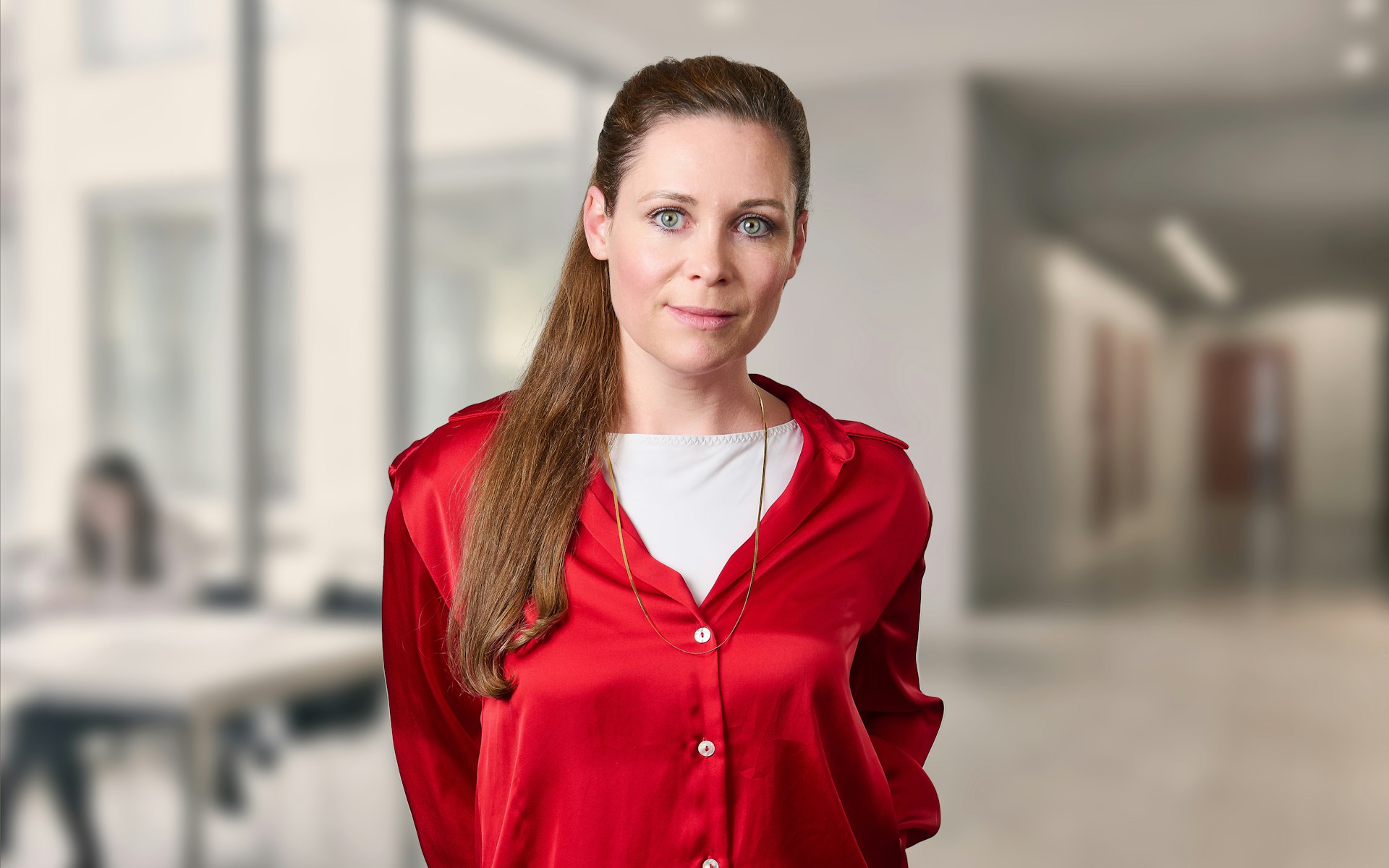
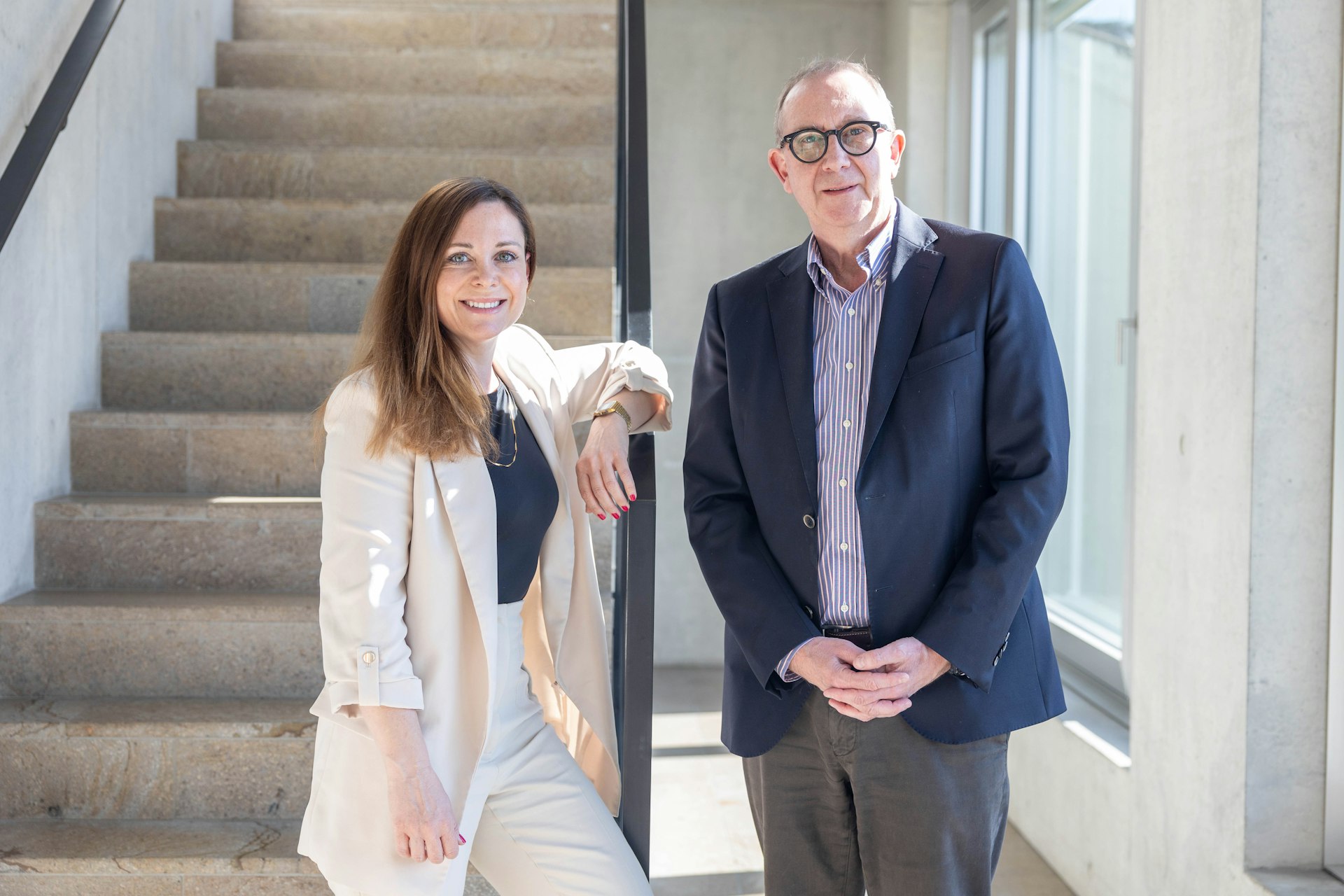
HWZ is strengthening its executive education provision with a new division – the HWZ Executive School – thereby further expanding its range of executive education programmes for both experienced and aspiring leaders. Peter Statz, head of the HWZ Executive School, and Dr. Meike Wiemann-Hügler, deputy head, discuss how the executive education market is evolving, the role universities of applied sciences play in the professional development of leaders, and the vision behind HWZ’s new Executive School.
Campus · March 12, 2026
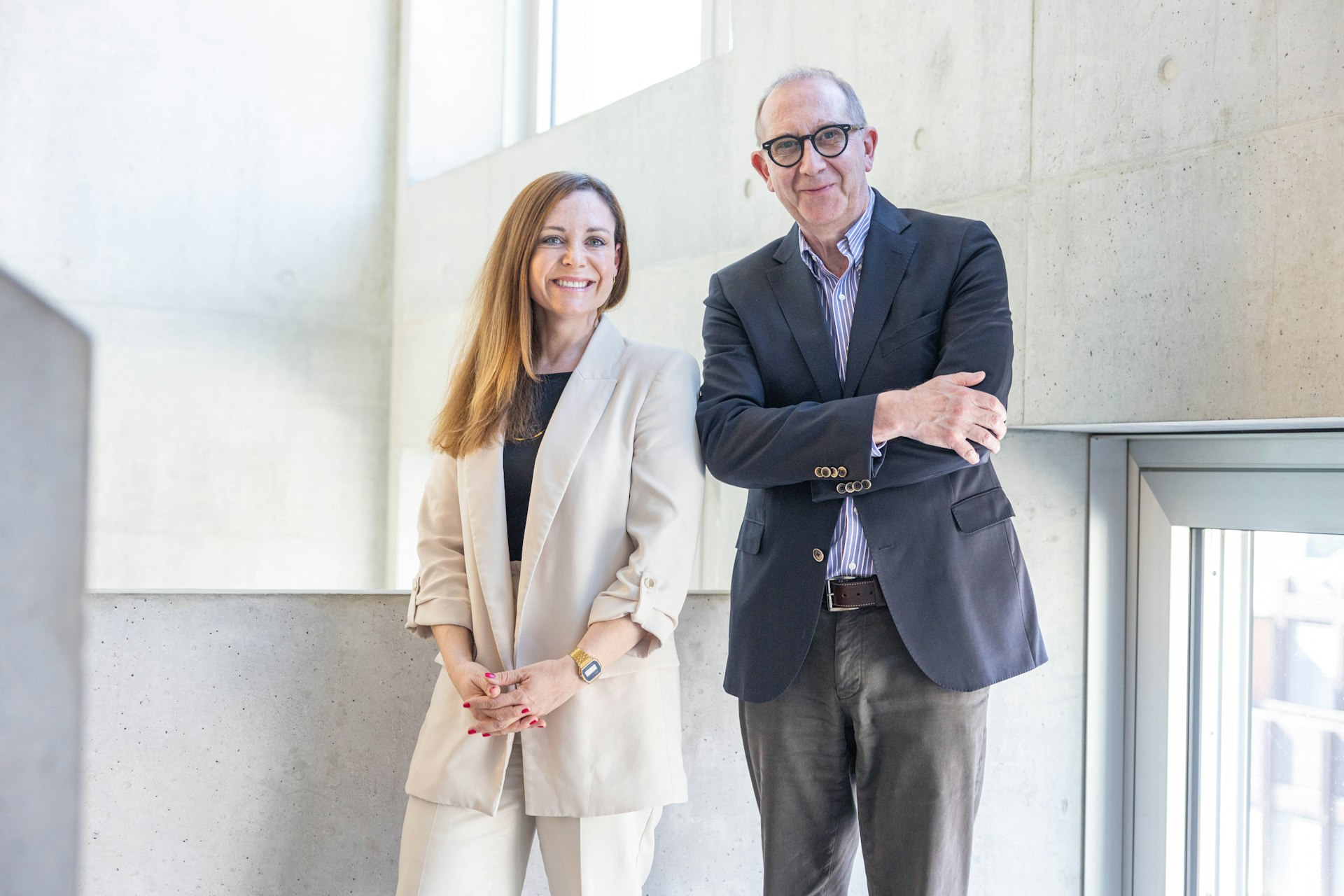
Peter and Meike, why is HWZ bringing together its executive education offerings in a dedicated Executive School at this particular time, and what role does this new area play in the ongoing development of HWZ?
Peter Statz: HWZ has been undergoing a transformation for some time, which has gained additional momentum with the appointment of the new rector in October 2024. As part of this process, various activities, networks and areas of expertise within the university have been more closely integrated and more clearly defined. Against this backdrop, the idea also emerged to make the field of executive education more visible and to bring it together organisationally.
With the new Executive School, we aim to address even more directly a target group that has always been important to HWZ: experienced and aspiring leaders and decision-makers. Our focus is not on creating something fundamentally new, but rather on making HWZ’s existing strengths—practice-oriented further education, close links with industry, and high-quality programmes—even more accessible within a unified framework.
The Executive School is also intended to provide space for additional formats, such as themed events, international study tours or new networking opportunities. A key priority for us is maintaining a long-term relationship with our participants: through a growing executive community, we aim to foster lasting exchange among alumni as well as with the university.
In this sense, we do not see the Executive School as separate from existing programmes or departments, but rather as a platform that visibly connects their offerings and makes a further contribution to the strategic development of HWZ.
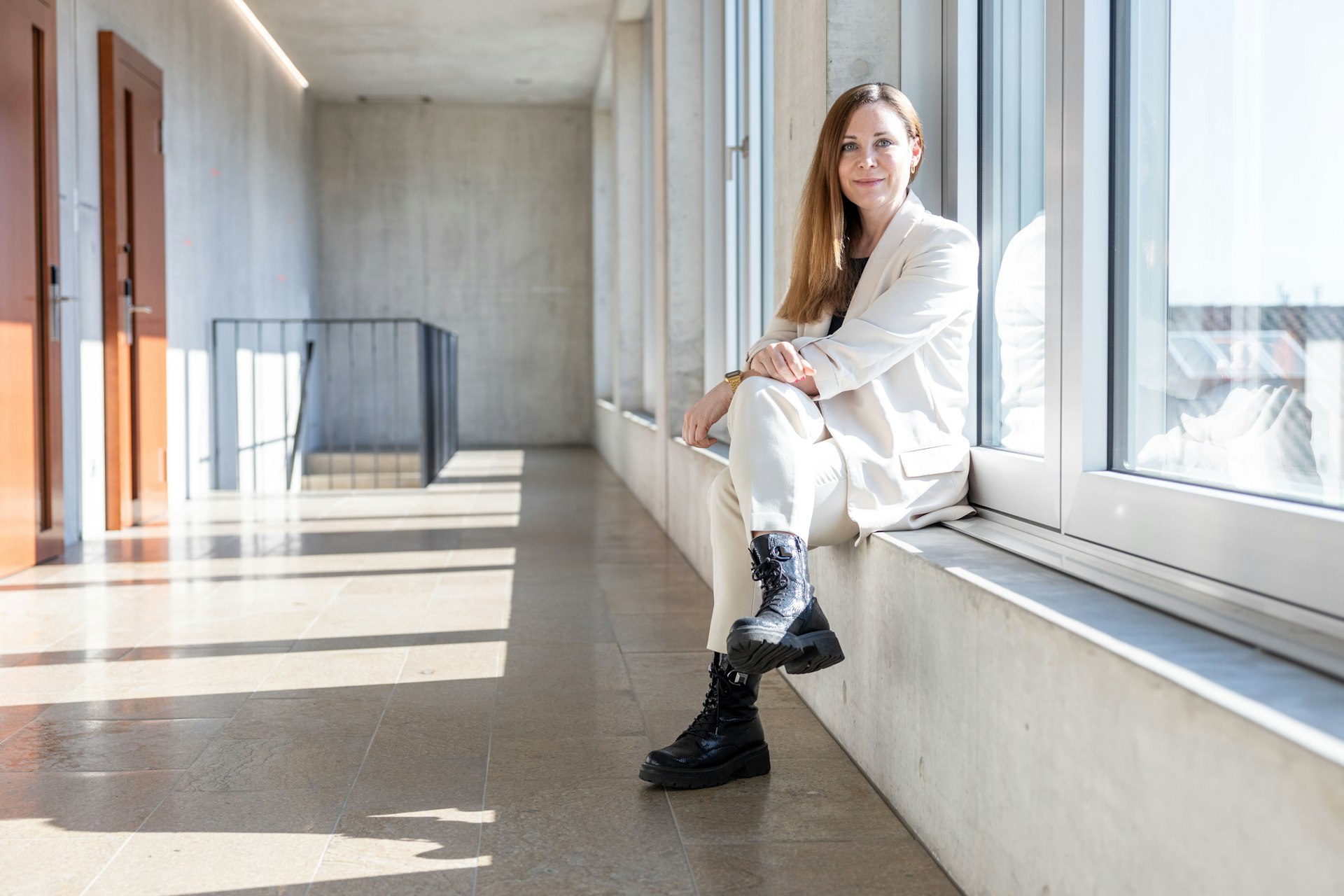
What changes have taken place in the executive education market in recent years, and which gap in the Swiss education sector do you aim to address with the Executive School?
The executive education market is certainly evolving, even if its fundamental principles remain largely unchanged. Today, executives are increasingly focused on topics such as digitalisation, artificial intelligence, transformation, and geopolitical developments. At the same time, there is a growing demand for further education that can be effectively combined with a demanding professional life and offers opportunities for exchange with other experienced leaders.
What has changed most significantly is the expectation of continuous learning. Many executives no longer view further education as a one-off qualification, but rather as a long-term development process spanning various stages of their careers. In particular, the rapid advancement of artificial intelligence is shortening the half-life of knowledge. Executives must be able to continually understand and assess technological developments, new business models, and their impact on organisations.
We are less concerned with claiming a supposed gap in the market. Rather, our aim is to create a place where executives can continue to develop and network with one another over an extended period.
There are already executive schools at Swiss universities. HWZ would be the first Swiss university of applied sciences to have an independently managed executive school. How does our offering differ from those at universities?
Peter: Exactly, there are already executive schools at Swiss universities. These have a long tradition and make an important contribution to management development. However, as a university of applied sciences, HWZ brings a somewhat different perspective to this market.
Universities of applied sciences have traditionally been more practice-oriented and maintain close links with industry. This strong connection to professional practice also shapes our executive education. Many of our programmes are developed in collaboration with business leaders and companies, and are closely aligned with the current challenges faced in day-to-day management.
Another possible difference lies in the composition of participants. While university programmes are often highly international and academically oriented, many of the participants at HWZ are executives from the Swiss business sector who contribute their specific questions and experiences to the programmes. This leads to a highly practice-oriented exchange among peers.
Meike: In addition, with the Executive School, we aim to further develop the community surrounding our programmes. Alongside the degree courses, we therefore intend to introduce more formats that promote long-term exchange among executives. In this sense, we do not see the Executive School as an alternative to university offerings, but rather as a complementary perspective within Swiss executive education.
Who is the Executive School specifically aimed at, and which challenges faced by managers are you seeking to address with it?
Peter: The Executive School is primarily aimed at experienced executives at senior management and board level, as well as entrepreneurs who wish to actively develop their organisations and shape transformation in a responsible manner.
Many executives today operate in an environment characterised by high levels of dynamism and uncertainty—often described as a BANI world: brittle, anxious, non-linear, and incomprehensible. As a result, leadership increasingly involves managing ambiguity, making well-founded decisions under uncertainty, and at the same time providing direction for organisations.
Alongside traditional management topics, skills such as creativity, systems thinking and responsible corporate governance are therefore becoming increasingly important. One insight is particularly significant: the more technology, digitalisation and artificial intelligence become integrated into organisations, the more central the human factor becomes. Today, leadership means more than ever shaping organisations in such a way that people can realise their potential, take on responsibility and develop innovative solutions together.
Our Executive School aims to strengthen leaders precisely in these competencies. Our programmes combine current developments in business and technology with a modern understanding of leadership, while also creating opportunities for exchange among executives who face similar strategic challenges.
Which skills and topics are at the heart of the programmes – for example, in areas such as leadership, transformation, innovation or digitalisation?
Meike: The guiding principle of our programmes can be expressed as follows: leadership for human-centred transformation. At the core are the skills essential for responsible and future-oriented organisational management. These include strategic leadership, shaping transformation processes, and confidently navigating technological developments.
A particular focus is placed on equipping executives with the knowledge of how new technologies and AI-driven business models are transforming decision-making processes and organisations – and how they can actively and responsibly shape these developments. Especially as technological advancements, particularly in the field of artificial intelligence, are evolving so rapidly, it is becoming increasingly important for executives to continuously update their knowledge and develop new skills.
In doing so, we draw on the experience and expertise we have gained in the Executive MBA General Management and especially in Executive MBA Digital Leadership have already established, and deepen these in the context of current technological developments. Responsible leadership skills and a clear values-based approach form a central foundation in this regard.
The Executive School is still in the conceptual and development phase, with the official launch planned for late autumn. What is your vision for this new area, and how do you see the offering developing over the coming years?
Peter: We aim to consolidate and further develop HWZ’s existing strengths – practical relevance, close links with industry, and high-quality programmes – in a targeted manner.
A guiding principle of our Executive School is the triad of people, organisation and technology. We are convinced that companies can only realise their full potential when these three dimensions interact effectively, and when economic performance, technological development and responsible leadership are in harmony. The programmes offered by the HWZ Executive School therefore combine topics such as leadership, transformation, innovation and digitalisation with questions of social responsibility, and strengthen the ability to lead organisations successfully and responsibly in an increasingly technology-driven world.
With this in mind, over the coming years we aim to gradually establish a platform that brings together outstanding professional development, a strong network of executives, and a considered perspective on modern leadership.
HWZ Executive School
Die HWZ Executive School ist ein neuer Bereich der HWZ, der die Executive-Education-Aktivitäten der Hochschule bündelt. In diesem Rahmen werden verschiedene Programme für erfahrene und angehende Führungskräfte zusammengeführt und schrittweise weiterentwickelt. Das Angebot wird bestehende Executive-Weiterbildungen sowie neue Formate für Führungskräfte und Entscheidungsträgerinnen und -träger umfassen. Weitere Informationen folgen mit der offiziellen Lancierung des Bereichs im späten Herbst 2026.
Find out more: