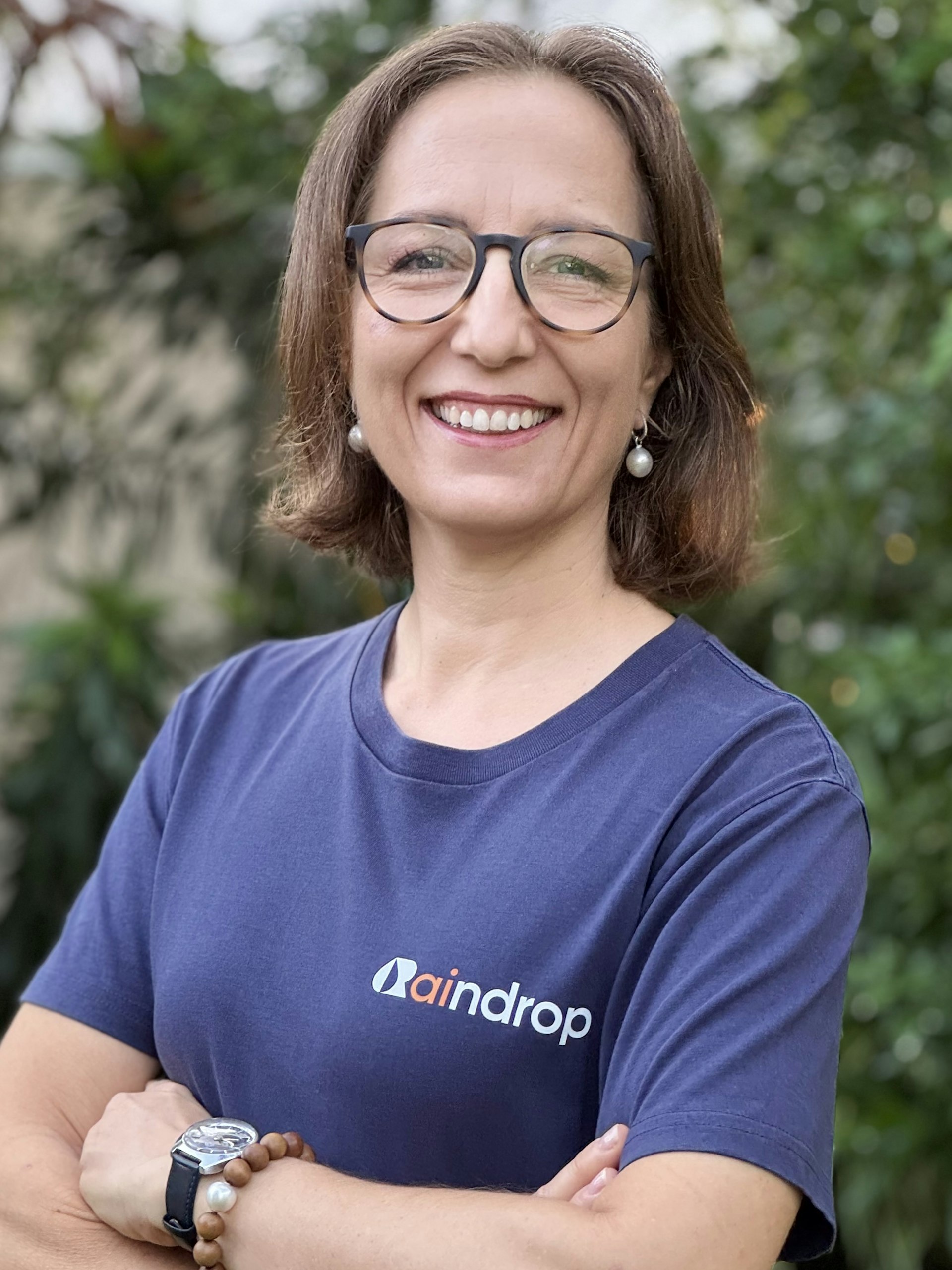
From Corporate to Entrepreneurship
Raindrop: How an Insurtech Was Born from an Idea at HWZ
How does an experienced corporate manager become a founder? For Jasmin Flori-Hess, this journey began in the context of a workshop at HWZ. Today, she leads the insurtech company Raindrop in Australia. In this interview, she discusses lifelong learning, the courage to take new paths, and why the best ideas often emerge where people with different perspectives come together.
Campus · June 24, 2026

Zurich and Darwin are separated by around 14,000 kilometres. However, this distance is barely noticeable when speaking with Jasmin Flori-Hess. Originally from Switzerland, she now lives with her family in northern Australia, where she runs the insurtech company Raindrop.
While summer days in Switzerland are becoming increasingly hot, she laughs as she describes a “cool” 25 degrees and mentions that she even needed a light jacket for her morning walk. Despite having spent many years in Australia, her Swiss German remains unmistakable—although English words do slip into the conversation from time to time.
Today, Jasmin develops AI solutions for the insurance industry with Raindrop. However, this journey began with a simple observation—and a workshop at HWZ. In conversation, she explains why entrepreneurship is, above all, a learning process for her, and why curiosity has remained her most important companion to this day.
Jasmin, you are leading an insurtech company, Raindrop, in Australia. Looking back, where did this journey begin, and at what point did the idea actually turn into the decision to found the company?
I have personally experienced the problem of incomprehensible insurance policies. With a bachelor’s degree in communications and nearly 15 years of professional experience in the banking and MedTech sectors, I thought, “Surely the small print can’t be that difficult.” After spending around 15 hours reading, I had to admit: yes, it is. These documents are barely understandable for many people.
The decisive moment came during a workshop at HWZ. In discussions with experts in the field of natural language processing (NLP = Natural Language Processing is a subfield of AI that focuses on how computers can understand, analyse and generate human language) it became clear to me what potential artificial intelligence holds for the analysis of complex texts. Suddenly, all the pieces of the puzzle came together to form a complete picture: there was a real problem, the technological means to solve it – and a market in need of exactly that solution. In that moment, an idea became the decision to found a company.
Department of Entrepreneurship, Innovation & Academy
The future belongs to those who actively shape it. The Department of Entrepreneurship, Innovation & Academy at HWZ empowers individuals to think entrepreneurially, act innovatively, and take on responsibility. We believe that the best solutions emerge where sound knowledge meets real-world challenges.
The decisive impetus therefore came from exchanges with experts. At that time, you did not yet have any traditional start-up experience and had to acquire many new skills. How did you deal with this uncertainty?
My secret? Not being afraid to ask “stupid” questions. A healthy dose of curiosity is the absolute driving force behind any start-up. At the same time, my many years of experience in the corporate world gave me the confidence to question the status quo critically. Innovation often begins precisely at that point: when you stop taking things for granted.
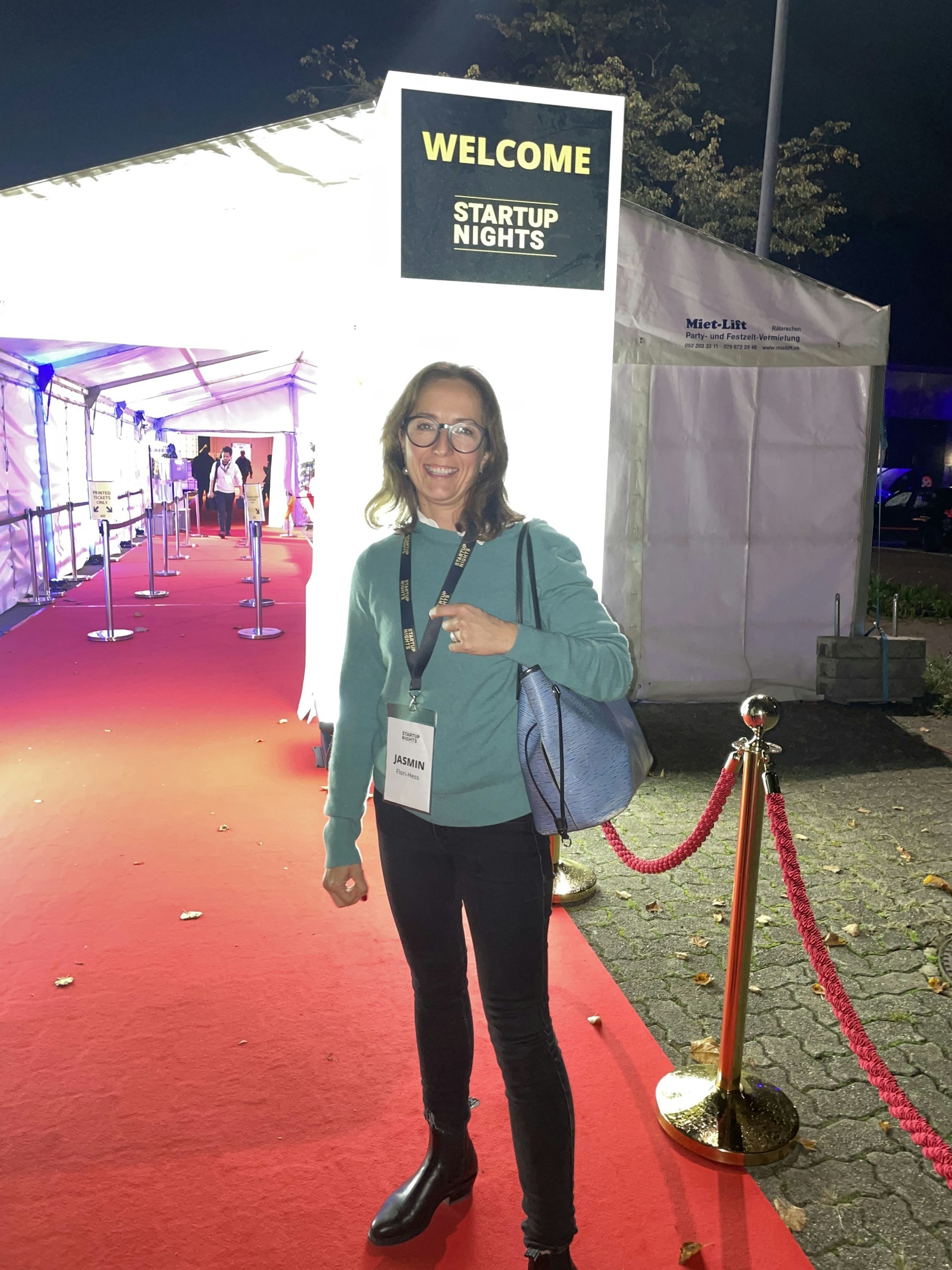
Anyone who starts a business quickly realises that good ideas alone are not enough. You also need to learn how entrepreneurship works. In your search for answers, you attended events such as the Startup Nights in Winterthur. What was it about this ecosystem that particularly fascinated you?
I can still picture the countless posters in my mind today – for me, they were pure motivational mantras! What impressed me most was the openness. People share their ideas, network, and speak openly about mistakes. No one expects you to know everything from the start. Instead, you try things out, learn, and improve. This lived “design thinking style”, where everything is constantly optimised and questioned, immediately captivated me.
So you have deliberately immersed yourself in the start-up world, while also bringing over 20 years of experience from large corporations. How has your perspective on work, responsibility and decision-making changed as a result of your move into entrepreneurship?
My perspective on work has completely changed, as I now understand every single micro-step – from the very first building block through to scaling up. Even when I was employed, switching off was a challenge for me, but as a founder, it is on a whole different level. What I love is the pace: decisions are made in no time, and processes and products can be adapted very flexibly. The flip side? The responsibility rests entirely on my shoulders. That can be demanding, but it has helped me develop enormously on a personal level.
It was from this combination of curiosity, industry knowledge and entrepreneurial spirit that Raindrop was ultimately founded. What specific problem does the company solve, and why is artificial intelligence necessary for this today?
We make complex insurance information understandable, comparable and usable. AI helps us to process this information in such a way that it can be understood by people, systems and, in future, also by AI agents.
Despite all the technological possibilities, you deliberately rely on "human validated AI". Why does human expertise remain indispensable for you?
Because genuine deep-tech expertise does not develop in a vacuum. The foundation of our intelligence is built on critical scrutiny and ongoing feedback from real insurance experts. Only in this way do we achieve results that are both professionally robust and trustworthy.
One must look at the bigger picture: the wave of agentic e-commerce is only just beginning. This will completely revolutionise the way products—and indeed insurance—are distributed. If AI agents are to operate autonomously in future, they must be able to read and understand complex insurance documents without error. This is precisely where we provide the crucial link—the bridge between human expertise and artificial intelligence.
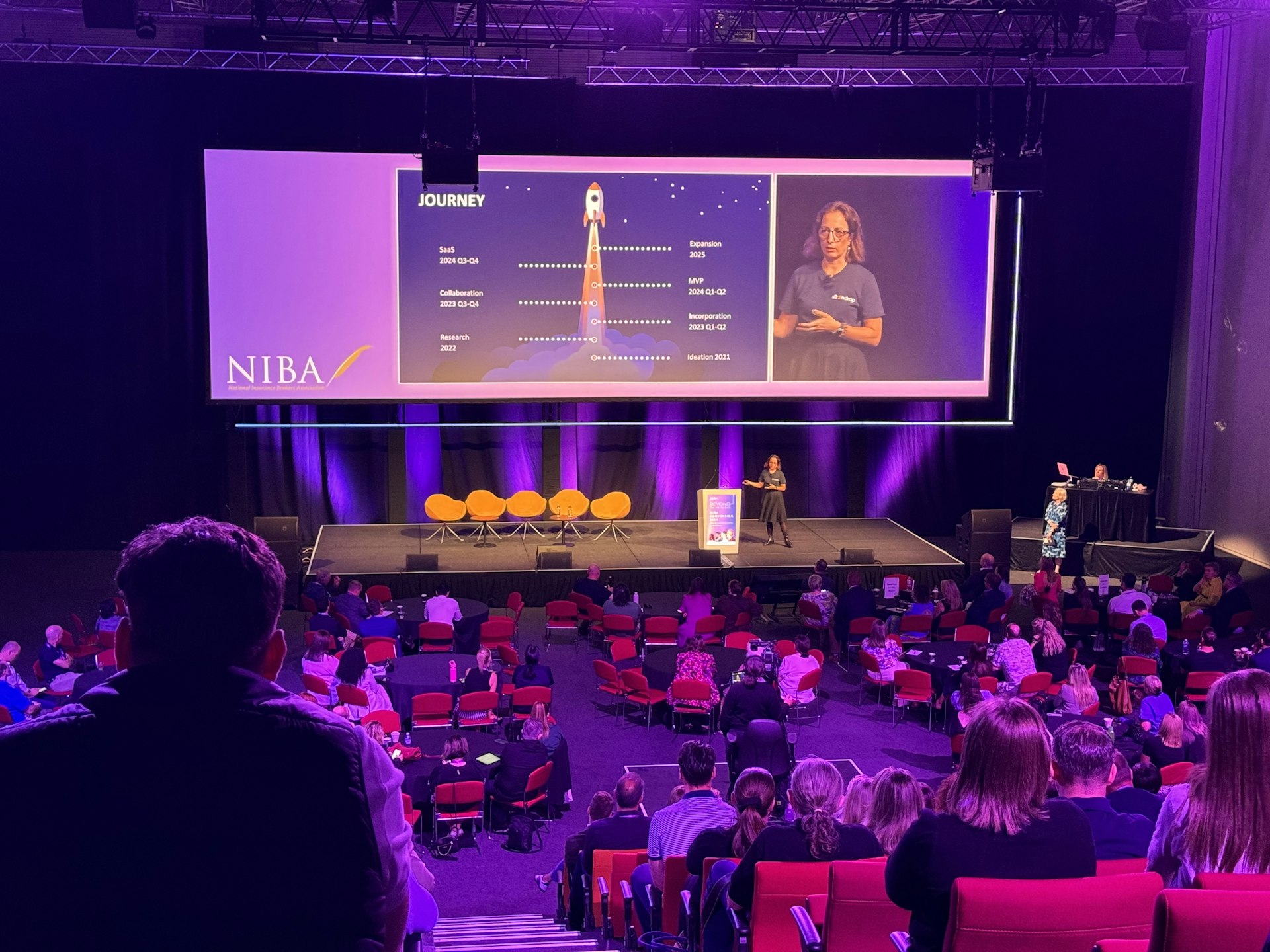
In your work, you combine communication, technology, insurance expertise and organisational skills. How important are such interdisciplinary perspectives when it comes to fostering innovation?
Extremely important: you do not need to be an absolute expert in every area from day one. What matters far more is having a radical curiosity and boundless energy. That was exactly my experience: I come from the world of communications and initially had very little knowledge of the insurance sector. But that turned out to be my greatest advantage. I was able to approach things with the fresh perspective of an outsider, ask critical questions, and take entirely new directions.
Technologically, I was certainly never at the level of a software engineer. However, with a bit of basic HTML knowledge from my studies, a good instinct for technology, and the confidence to constantly ask my developers “Why? For what reason? And why not do it this way?”, I now understand our entire infrastructure, AI models, and the logic behind the code. This understanding is extremely helpful to me today in building bridges between different departments.
Continuous learning appears to be a consistent theme throughout your career. You have completed various educational and further training programmes, including in project management at the SGO Business School, with whom HWZ has been working as a certification partner for many years. What role did further education play in your journey?
For me, continuing education is a prerequisite for innovation. And this does not take place solely in the traditional lecture hall or on campus. It happens through online courses, but above all, directly on the job. That is precisely why I value the practice-oriented programmes at HWZ so highly. Theory provides the foundation, but real-world application is absolutely essential. Our start-up is where it is today because we are constantly learning, applying our knowledge, and developing further.
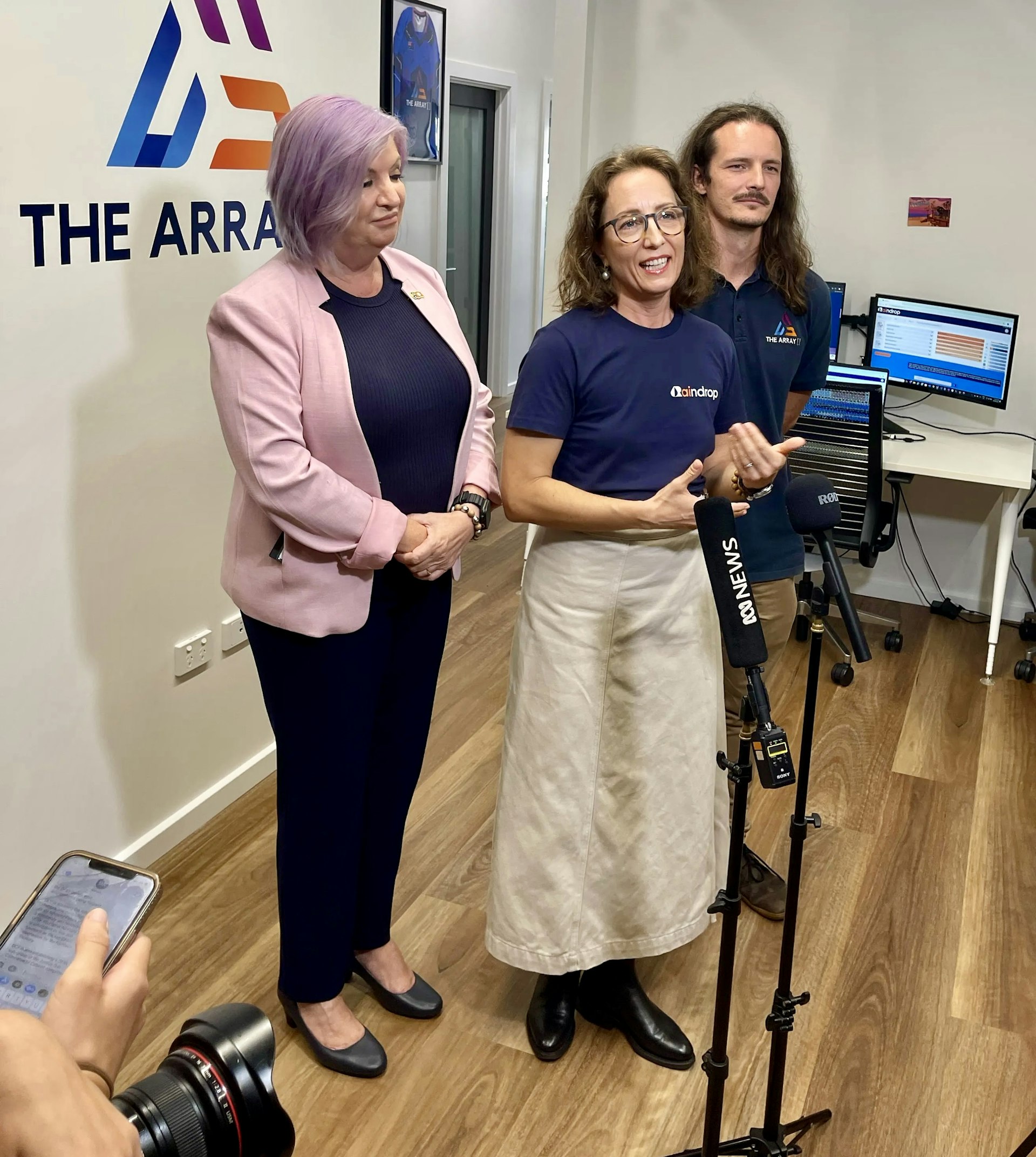
It is becoming increasingly clear how important encounters have been along your journey. And sometimes, they occur in the most unexpected places. Our Principal Brian met you on his journey through Australia at a barbecue with mutual friends. It was only during the conversation that it became clear this encounter was also the origin story of Raindrop. What does this moment reveal to you about the role of encounters and unexpected connections in entrepreneurship?
It was a surreal moment. In the middle of Australia, suddenly speaking Swiss German at a barbecue and realising that we shared the same passion for start-ups – I simply love encounters like that. That’s where the principle of “serendipity” comes into play. It wasn’t just a stroke of luck; there is usually a touch of magic involved as well.
Being in the right place at the right time cannot be set out in a business plan or learned in a seminar. The only thing you can do is:
Approach the world with open eyes, seek conversation without prejudice, and show genuine interest in others. Communicate authentically, enjoy the process, and remain eager to hear and share new stories – this opens doors you never even knew existed.
Looking back at the origins of Raindrop today: what does it take for ideas, encounters and curiosity to ultimately develop into genuine entrepreneurship?
Ideas, encounters and curiosity are important catalysts. However, to turn these into a business, what is needed above all is execution, resilience, and the courage to step outside your comfort zone.
About Jasmin Flori-Hess
Jasmin Flori-Hess is the founder and CEO of Raindrop, an innovative InsurTech start-up. Before taking the step into founding her own company, she spent over 20 years in senior roles within the finance and medical technology sectors. Her focus was on leading complex change management processes and providing communication support for product lines.
As founder, Jasmin combines in-depth industry knowledge with a truly customer-focused approach. With Raindrop, her aim is to make complex processes accessible and transparent. As a thought leader in the digital economy, she is also passionately committed to promoting tech clusters and positioning Australia’s Northern Territory as an attractive, forward-looking location for international tech investment.