How further education opens up new perspectives
From the CAS thesis to a pilot project against bullying
What does bullying prevention in a school class have to do with good leadership? More than one might think at first glance. Christine Jauch, a graduate of the CAS Digital Ethics HWZ, explored bullying and the question of how children can be empowered before bullying even arises in her final thesis. What began as a theoretical investigation developed into a concrete pilot project with a year 6 class. In this interview, she shares her insights on group dynamics, psychological safety, and leadership.
Testimonial · September 1, 2026
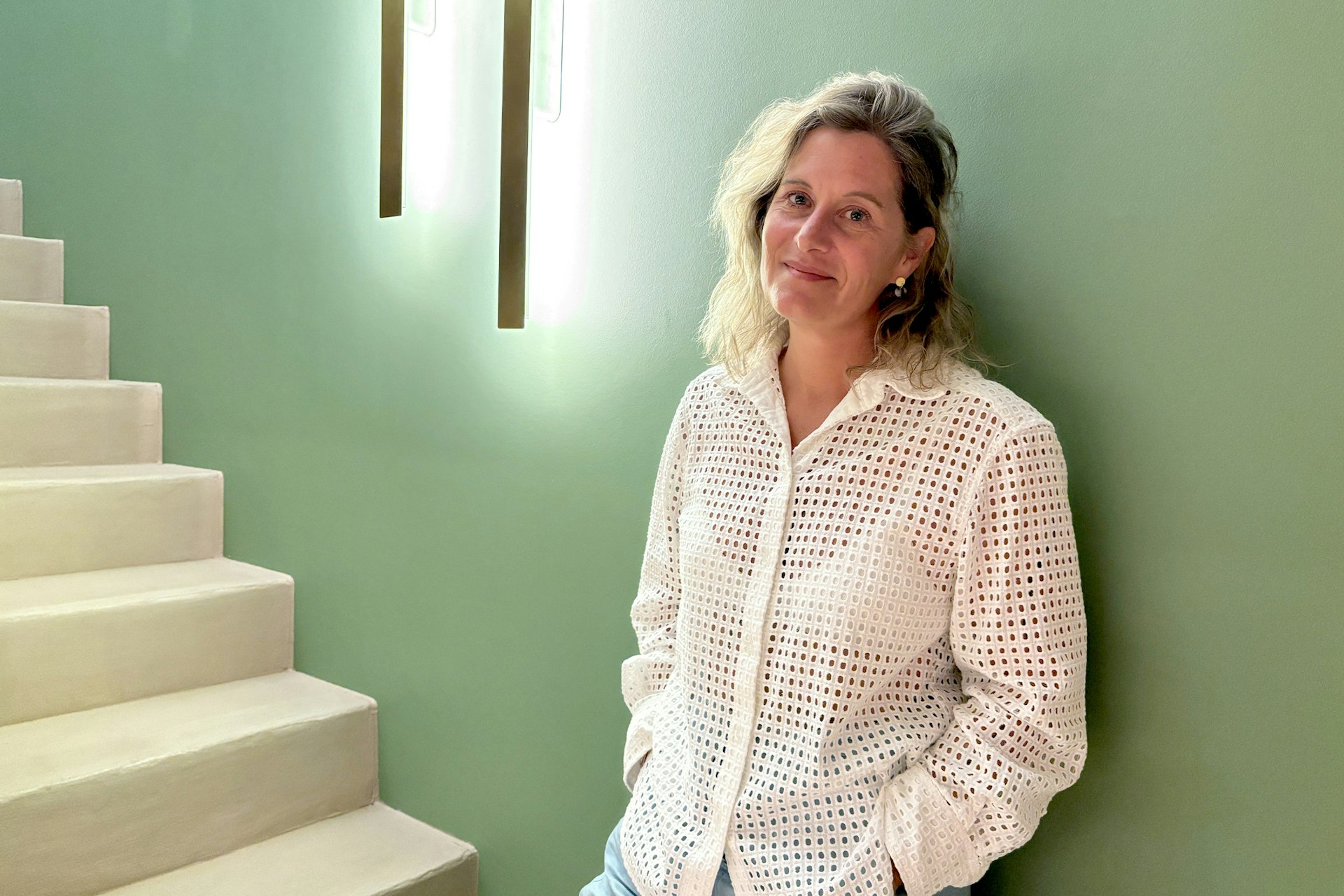
Ideally, continuing education does not end with the certificate, but instead opens up new perspectives, inspires, and generates practical ideas for everyday work. This is exactly the path that Christine Jauch, a graduate of the CAS Digital Ethics HWZ. With her many years of experience in marketing and leadership, she completed the CAS Digital Ethics at HWZ. As part of her CAS final project, she explored the topic of bullying and asked herself: How can we empower children before bullying even begins?
This question gradually led to the development of a pilot project with a school class. At the same time, Christine Jauch realised that many of the dynamics found in the classroom can also be applied to teams, organisations, and everyday leadership. In the interview, she discusses her first successful pilot project and the lessons she has taken from it for herself and for other leaders.
Christine, you bring many years of experience in marketing and leadership. What motivated you to undertake the CAS Digital Ethics at HWZ? What questions or expectations did you have when you began this further education programme?
I have been engaged for some time with questions relating to leadership, digitalisation and organisational culture. My roles have often been at the interface with technology. I wanted to explore in greater depth the ethical issues arising from rapid technological developments. I also hoped to nurture my philosophical side ;-). And it certainly was! I was particularly looking forward to the interdisciplinary backgrounds of both lecturers and students.
I was interested in the question, what is technologically possible today and perhaps tomorrow, and I wanted to bring myself up to date on this; however, almost more so the how we can handle new technologies responsibly. How do we make good decisions when there are no simple answers regarding their impact on people and organisations?
The CAS Digital Ethics has definitely broadened my horizons. I have learned to approach complex issues from an ethical perspective and not to rush into simple solutions.

As part of your CAS project, you explored the topic of bullying. What led you to choose this subject?
To be honest, it was a difficult start. As I was undergoing a professional transformation and wanted to move away from marketing, a marketing-related topic was out of the question for me. But then what? Through exploring ethical questions regarding the use and design of social media, I arrived at the target group of children. Unfortunately, this quickly led to the topic of bullying, specifically cyberbullying. A little research soon revealed the sore point from which Switzerland also suffers: bullying is an everyday phenomenon. Children are facing psychological pressures at an increasingly early age and in more varied ways, while the support system is inadequate.
That’s when the idea occurred to me: what if children had an age-appropriate digital assistant powered by AI? The fact that children and young people are increasingly using ChatGPT as a psychological adviser shows that there is a real need. It appears to be their workaround. At the same time, this usage raises some critical questions. So, it struck me as a particularly interesting topic to explore. And something like this certainly has potential for innovation!
In one of your LinkedIn posts, you wrote that after completing your CAS thesis, one question in particular stayed with you: «How can we empower children before bullying even begins?» Why did this specific question become the starting point for your project?
Bullying can have a lasting negative impact on individuals well into adulthood, affecting both their life satisfaction and their ability to cope with everyday life. When I read a study on the long-term effects of bullying on adults’ ability to work and form relationships, it stayed with me. This English study even quantified the economic cost of experiencing bullying in childhood. I believe these findings are also applicable to Switzerland: higher healthcare costs, loss of working days, and underutilised workforce potential. This is something that society should be concerned about.
In the long run, prevention would probably be more cost-effective than having to put out fires later. I am also surprised by how few schools and cantons invest in systematic bullying prevention. Of course, there are prevention initiatives available. After all, I am not the first person to raise this issue. Either these initiatives are not well known, there is a lack of awareness of the topic, or there are constraints on time and funding. It does give one pause for thought.
I also drew a parallel between my leadership experience and children in school systems. In my leadership, I place great importance on a ‘healthy’ system. This means I pay close attention to lived values, which I am convinced foster a productive and collaborative environment. It is about people-centred leadership, which enables most individuals to perform at their best. In fact, it is not so different with children.
So, what can be transferred from the world of work to the classroom? I approached the children with the same appreciative, open and humble attitude. To me, it made a great deal of sense to develop a concept that strengthens the entire system, rather than focusing on perpetrators and victims. The power and potential lie within the group. That is what I want to convey. It is about strengthening the class community and considering what each individual child can contribute. In fact, this belongs to the area of personal development and learning to deal with emotions – something I would most like to see included in every child’s curriculum. It would strengthen us as a society for the future.
Many CAS assignments conclude with submission. In your case, this led to a pilot project. Was there a particular moment when you realised that your idea could become something more?
I continued to pursue the original CAS topic for a short while, but I knew that developing an AI chatbot would require resources I did not possess. In discussions with teachers and psychologists, I also realised that my bystander perspective was met with considerable approval. I increasingly felt encouraged simply to try out a workshop concept. And once I received a firm commitment from a school management team and a teacher, there was no turning back.
It was clear to me from the outset that I would declare and conduct it as a pilot. This meant that all of us – the lecturer, the class, and myself – knew that we were trying something out together, learning, and adapting as we went along. For example, I regularly asked the class for honest feedback. I strongly follow the principle of «fail fast – learn fast».
You described the launch of the pilot project as a «leap into the deep end». What gave you the courage to take this step, even though much was still uncertain?
Probably my life experience! I have often thrown myself in at the deep end and know that this is where the learning curve is steepest. It does require energy, but I also gain a great deal from such experiments and completely new realities. Naturally, I also felt a sense of respect. It is important to know your own limits and weaknesses.
Fundamentally, I thoroughly enjoyed building something from the ground up and discovering whether and how it would work. Had I not done it, I would never have found out if it worked. What is there to lose? In truth, nothing.
I also wanted to find out how compatible and valuable my leadership experience could be within the educational sector. I am convinced that we can all learn from each other’s professional backgrounds. I also relieved myself of the pressure to have everything perfect from the very beginning. The agile way of working has had a significant influence on me in this regard.
You write that the decisive step was the «mental shift» of revealing your own idea. Only then did doors open and valuable contacts emerge. Why was this realisation so important for you, and what role did your network play along the way?
Yes, that was a decisive step which I knew I had to take. It makes a significant psychological difference when you start telling those around you about your plans. It creates a sense of commitment to yourself. At the same time, something almost magical can sometimes happen. By opening yourself up mentally to something, you suddenly create new encounters that inspire you and open doors. That is exactly what needs to happen. Or, for those who are particularly bold, you can move forward with the motto «fake it until you make it».
In such situations, one should not hesitate to make use of one’s existing network. At the same time, I believe it is also effective to deliberately open oneself up to new opportunities. This often requires stepping out of your comfort zone. I have also prepared a pitch for this purpose.
In general, I can say that I met many dedicated experts from the ecosystem who listened to me openly and provided honest feedback. From my work in market research, I know that people are usually happy to share their expertise when asked about their specialist knowledge. And it is always important to ask for further interesting contacts at the end of such conversations ;-).
Your background is originally in marketing and management, rather than in the education sector. In what ways was this external perspective an advantage for your project? Which experiences from your previous career were you able to draw upon?
I tried to apply and test this in a targeted way. For this, it requires an equally open-minded counterpart. I found such a person. I am an empathetic individual who approaches others without prejudice and allows everyone their own responsibility and expertise. To a large extent, this approach also resonates well with children. I consistently designed the project from the users’ perspective, that is, from the perspective of the pupils.
Methods such as human-centred design and design thinking were helpful to me in this process. Rather than starting with a ready-made teaching concept, I first wanted to understand the actual needs of pupils, teachers, and schools.
The design of the teaching materials was, for the most part, similar in style to that found in the workplace. I relied on analogue methods such as flipcharts and began each session with working agreements, which were well received by the children. The teacher was able to provide me with helpful input on how to make the content more suitable for children. Break times were also organised differently (for example, a race from the fourth floor down and back up again—something that would never have happened in my school days in the 1980s ;-D). The variety of teaching formats and the amount of content also need to be managed differently. The key point here is attention span.
From my leadership experience, I was certainly able to draw on my knowledge of group dynamics, communication, and psychological safety. These are also key concerns for teaching staff.
After the pilot project, you wrote that group dynamics in the classroom function in surprisingly similar ways to those in the meeting room. Which parallels stood out to you in particular, and what insights can leaders take from this?
We also address values and codes of conduct within organisations.
How do we want to work together?
What makes us stronger together?
What are the no-go areas and what are the consequences of crossing them?
In my view, it is worthwhile to invest in good collaboration in both worlds. In a safe environment, people are able to work and learn more effectively. In my opinion, this is too often neglected, both at school and in the workplace. People tend to shy away from the initial effort. Yet, in the long term, this investment pays off through improved work performance and learning ability.
Teachers today are often so absorbed by disciplinary matters that they have little opportunity to focus on implementing the curriculum. This is frustrating for everyone involved. I have great respect for teachers. I was particularly impressed by the way the teacher in the pilot project worked with the children on a daily basis. She taught with clarity and consistency, while at the same time showing each child a great deal of warmth. She adopts a zero-tolerance approach to bullying. Due to previous incidents in the class, she was already highly sensitised to this issue.
I would also like to see this happen more often in workplace environments. Too often, a toxic individual is tolerated for years. An entire system bends itself around them. People remain silent, look the other way, and deny what is happening. The harm caused to the group is considered less significant than the challenge of separating from a toxic person.
I have taught the children that «not taking action» also has an impact and can fuel a negative system. The same applies to leadership.
Looking back on the CAS Digital Ethics HWZ today: What role did the further education play in turning a study assignment into a concrete practical project?
A very large one. Without HWZ, there would have been no anti-bullying pilot! My holistic approach to addressing issues was further enriched by an additional perspective – that of digital ethics.
Above all, the further education encouraged me not only to analyse an idea theoretically, but also to test it in practice.
The first pilot with a year 6 class has now been completed. What are the next steps? What are your plans going forward, and what long-term impact do you hope to achieve with your project?
The pilot has shown that the approach works in principle. The response from the teacher, school management and the class was positive. The feedback also highlighted areas where adjustments are needed and where there is potential for further development. The crucial question is: who is willing to pay? Every innovation must be able to sustain itself. Unfortunately, schools often have limited means at their disposal. That is regrettable. I am currently in the process of presenting the concept to the authorities. Foundations and private educational institutions are also possible options. Fortunately, I can also rely on an established association in the field of mental health, which makes it easier to open doors. If no one can be found to provide funding, then I know I will have to let go of my project.
In the long term, I hope that bullying prevention will become a matter of course. It concerns the mental health of children and how they are equipped for a fulfilling (professional) life. This is our collective responsibility as a society.