Alumna in Focus
Those who wish to shape transformation must never stop learning.
Artificial intelligence, new competency requirements and changing professional roles are presenting significant challenges for organisations and their employees. Those who wish to shape the future must therefore be prepared to engage in continuous development. Edda Rettinger, alumna of the MAS Human Resources Leadership HWZ and the Executive modul, since September 2026, Chief Human Resources Officer (CHRO) at CH Media, explains in conversation why continuing education is a strategic leadership responsibility and why even experienced managers should remain curious.
Testimonial · November 23, 2026
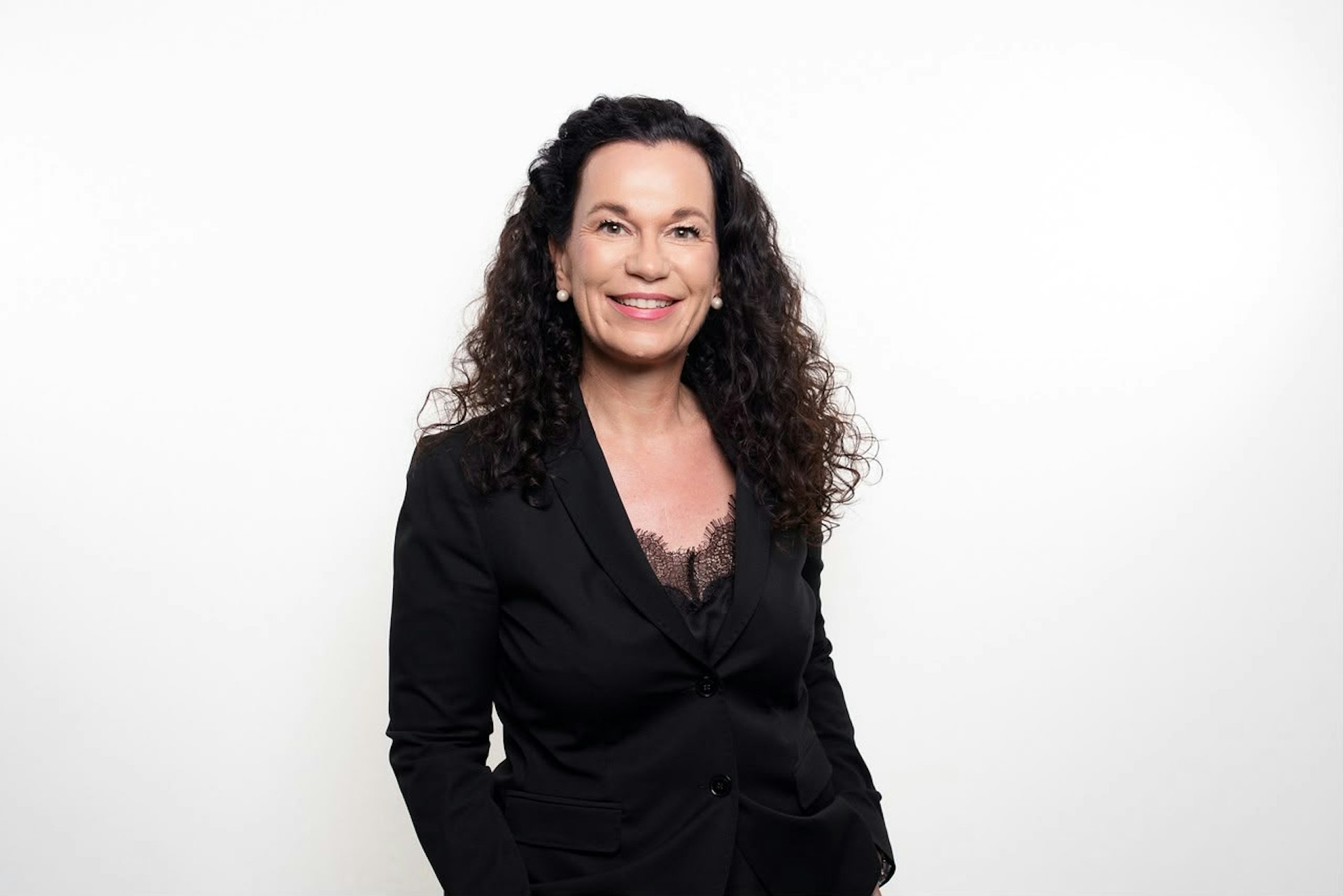
Artificial intelligence is transforming job profiles, creating new skills requirements and thereby changing recruitment. Organisations must prepare their employees for tasks that may not yet even exist in their current form. Human resources, in particular, plays a crucial role in this process: it must identify which skills will be needed in the future and how these can be developed within the organisation. However, learning is not solely a corporate responsibility. Managers, too, must be willing to continually develop their own attitudes and knowledge.
Edda Rettinger embodies this attitude and is familiar with this development from various perspectives: in 2018, she completed the MAS HR Leadership at HWZ. In 2026, she returned for the Executive module at HWZ. Since September 2026, she has been Head of Human Resources at CH Media and a member of the executive management team.
In conversation, she explains how HR work is changing, why continuing education must become a strategic responsibility for managers, why learning needs to take place as part of everyday work, and why experience should never be a reason to stand still.
AI is transforming the world of work, job profiles are evolving, companies must continually develop their employees, and HR is expected to help shape this transformation. But is HR itself truly prepared for this role?
Partially. I see a great deal of commitment, but also an uncomfortable question: how can we drive transformation within the company if we do not consistently question our own way of working?
AI makes this challenge particularly clear. It is not enough to offer training or introduce new tools. HR must experiment, continue learning, let go of old ways, and understand what is changing for people, organisations, and business models – and how we can provide real added value in this process. Those who wish to shape transformation must themselves remain capable of transformation.
How significantly has HR work changed in recent years? What is fundamentally different today compared to five or ten years ago?
Progress is by no means uniform everywhere. When I was at Swisscom around ten years ago, digitalisation and innovation were already part of everyday life (in my CAS Innovation course, it felt as though every other practical example came from Swisscom). Even today, I encounter companies that, in some areas, have not yet reached the stage we were at back then.
What has changed for the better, however, is that more and more HR professionals are rethinking HR, approaching it with a stronger understanding of business management and a keen sense of what people and organisations need. Technology can help us by taking over routine tasks and creating space for new opportunities. What matters most is how we use this freedom: to be closer to people, to strengthen leadership and collaboration, and to create an environment in which individuals can realise their potential.
In your opinion, what is still being done incorrectly in personnel development? Where are companies investing too little or thinking too short-term?
We still too often think of staff development in terms of seminars, programmes and certificates. However, what truly matters is not what someone has learned, but what has changed as a result.
Organisations invest heavily in further education, but often too little in transferring what has been learned into everyday working life. People need time and space to try out new things, gain experience, and be allowed to make mistakes.
It is just like jogging: high-tech running shoes and a book about marathon running do not automatically make me a better runner. What is needed is regular training. And it is precisely this that managers must enable in everyday working life.
It is not only technologies that are changing, but also the professions and the skills that organisations require. Job profiles that are still relevant today may look completely different tomorrow. In future, will companies need to focus more on competencies and potential rather than traditional job profiles?
Yes, absolutely. But not in the sense of an either-or decision. Traditional job profiles provide guidance, but primarily describe current requirements. Those who focus solely on these are driving while looking in the rear-view mirror instead of at the road ahead.
In future, therefore, not only existing competencies will count, but also potential, ability to learn, and willingness to learn. The aim is to align these with the strategic requirements of the organisation, rather than to immediately transform every organisation into a skill-based organisation.
Continuing education is often seen in companies as an offer or a benefit. Should it not, in fact, be an integral part of corporate strategy?
Both/and. Strategic skills development must be closely linked to corporate strategy and workforce planning. We need to consider today which skills we will require tomorrow.
At the same time, continuing education should also allow space for personal interests, curiosity, and individual development. Not every course needs to have an immediately measurable business case. Sometimes, the most valuable ideas arise precisely where we were not originally looking for them. And by the way: learning can be enjoyable too!
How much responsibility lies with HR, with managers, and with the employees themselves?
Responsibility is shared. HR must work together with the business to identify future competency needs and create development opportunities. Managers must provide time and space to enable learning to take place in everyday work. Employees, too, are responsible for their own development. The same applies to me:
Each year, I set aside a personal budget for further education, just as naturally as I do for holidays. I consciously invest my own time and money, rather than waiting for my employer to suggest, fund or organise something for me. If my employer does support me, I greatly appreciate it. After all, if I am not prepared to invest in my own future and in myself, why should anyone else?
Edda, you completed the MAS HR Leadership yourself in 2018 and returned to HWZ in 2026 for the Executive Module. As of September 2026, you have taken on the role of Head of Human Resources at CH Media and are once again a member of the executive management team. Congratulations on this achievement!
What motivates you to continue developing yourself, even though you have already achieved a great deal in your career?
Thank you for the congratulations. I had a very good start and received a warm welcome.
Der MAS HR Resources Leadership war für mich ein echter Gamechanger und ein wichtiger Türöffner für meinen Einstieg in die Geschäftsleitung bei CALIDA im Jahr 2021.
For me, learning was not always associated with enjoyment. During my law studies, frustration with learning often outweighed any sense of satisfaction: memorising exam frameworks and following a curriculum that, for me, frequently seemed to have little relevance to practical experience. This changed when I was able to choose my own areas of study. Suddenly, it was no longer about recalling knowledge for exams, but about questioning my professional practice, gaining new perspectives, and growing both personally and professionally.
Today, I learn out of curiosity and enjoyment, not for the next qualification. And my list of upcoming topics to study is already far too long again! 😉

What impact did your further studies have on your professional path, and in particular on this career step? Were there specific topics, contacts or insights that prepared you for your current role?
My path into HR was not entirely conventional. My background is in talent attraction and recruitment, rather than HR operations, payroll, or the HR business partner function. The MAS HR Resources Leadership broadened my HR knowledge and equipped me for overall HR responsibility. Sometimes, a formal qualification is necessary, even though, on its own, it does not qualify anyone for a leadership role.
Through the Executive module, I am deliberately broadening my horizons beyond HR. Topics such as strategic turnaround management and ethical corporate governance, engaging with leaders from other industries, and critically reflecting on past decisions open up new perspectives.
Today, I assess situations differently than I did ten years ago and make different decisions. My knowledge and experience continue to grow, but my core values and positive view of people remain unchanged.

Has your understanding of leadership changed as a result of your further studies? Is there a belief you now see differently than you did in the past?
At the start of my career, I was convinced that professional success also required holding disciplinary leadership responsibility. When I did not receive such a role, I found it frustrating. I became increasingly ambitious and tougher, as I wanted to prove that I deserved a leadership position.
At around the age of 40, I made a conscious decision to pursue a specialist career and stopped measuring success by disciplinary leadership roles. Interestingly, it was precisely then that I was given leadership responsibilities. This experience has had a lasting impact on my outlook.
Today, for me, leadership is neither a matter of ego nor an end in itself, but rather an opportunity to support people in their development and to contribute together to the success of the organisation. My personal success? When members of my team shine, realise their potential, and I have played a part in making that happen.
What would you say to an experienced executive who believes they have learned enough?
I would ask her when she intends to hang up her leadership role. To stop learning and being curious is to stagnate. Experience is incredibly valuable, but it must not become an excuse to avoid engaging with new developments. Those who make decisions for the future cannot rely solely on yesterday’s knowledge.
In any case, I still have far too many questions to stop learning.